


Artichoke - Flavour of Spring

There are few vegetables that carry as much quiet drama as the artichoke. At first glance, it appears almost defensive—layered in tough, green armour, its tightly packed leaves concealing something tender at the core. Yet that is precisely its charm. The artichoke invites patience, curiosity, and a certain culinary intimacy. To eat one is not to consume it quickly, but to engage with it—leaf by leaf, bite by bite—until you reach its prized heart.
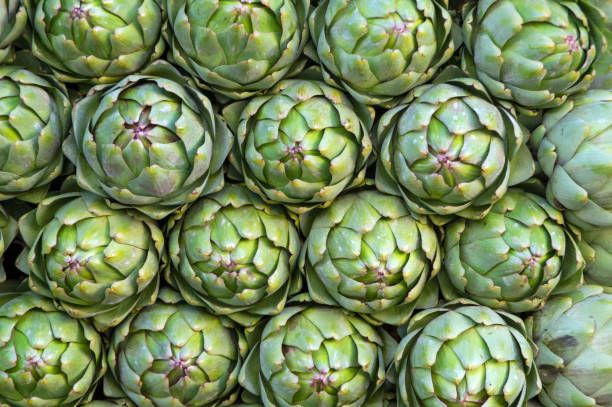
Its story begins in myth. According to Greek legend, the artichoke was once a beautiful mortal woman named Cynara. When Zeus fell in love with her, he brought her to Mount Olympus, but she longed for her human home and returned to Earth. Enraged by her disobedience, Zeus transformed her into an artichoke—prickly on the outside, yet tender within. It is a fitting metaphor: a plant that demands effort, but rewards those who persist. Across Mediterranean cultures, the artichoke has long symbolised both protection and indulgence, restraint and luxury.

Botanically, the artichoke is a thistle, a member of a family more commonly associated with weeds than delicacies. Yet its transformation into a culinary treasure is one of history’s great gastronomic achievements. From North Africa to Southern Europe, it spread along trade routes, eventually becoming deeply rooted in Italian, Spanish, and French cuisines.

Over time, distinct varieties emerged, each shaped by climate, soil, and tradition.
Among the most well-known types are the large, globe-shaped varieties—plump and generous, ideal for stuffing or steaming. Then there are the elongated, violet-tinged artichokes, more delicate in flavour, often eaten young and tender. Baby artichokes, harvested early, require little trimming and can be cooked whole. Each type offers a slightly different experience: some nutty and mild, others grassy, slightly bitter, and complex.
Preparing an artichoke is a ritual in itself. The outer leaves are trimmed, the stem pared down, and the choke—the fuzzy, inedible centre—carefully removed. What remains is a canvas for flavour. Steaming is perhaps the most traditional method, preserving its natural taste while softening its structure. Boiling, though quicker, risks diluting its character unless carefully seasoned. Grilling introduces a smoky depth, while braising allows the artichoke to absorb aromatics like garlic, lemon, and olive oil.

In many Mediterranean kitchens, artichokes are treated with reverence. They are rarely overwhelmed by heavy sauces; instead, they are enhanced with simple, thoughtful pairings. A drizzle of olive oil, a squeeze of citrus, a scattering of herbs—these are enough to let the vegetable speak. In this way, cooking artichokes becomes less about transformation and more about revelation.

In Croatia, artichokes hold a particularly cherished place along the Adriatic coast, where the climate mirrors that of other great Mediterranean growing regions. Known locally as “artičoke,” they are most beloved in Dalmatia, where they appear in both humble home cooking and refined coastal cuisine. Spring is their season, and their arrival signals a shift towards lighter, greener dishes after the heavier fare of winter.

One of the most iconic Croatian preparations is artichokes with peas—“artičoke s graškom.” In this dish, the artichokes are gently stewed with young peas, garlic, parsley, and generous amounts of olive oil. Sometimes pancetta is added for depth, though many versions remain entirely plant-based. The result is a dish that is both rustic and elegant, with the sweetness of peas balancing the artichoke’s slight bitterness.

Stuffed artichokes are another beloved speciality. Here, the leaves are gently opened and filled with a mixture of breadcrumbs, garlic, herbs, and occasionally anchovies or cured meat. They are then slowly cooked until tender, allowing the stuffing to infuse every layer. Eating them becomes a shared, almost ceremonial act—pulling away each leaf, savouring the seasoned flesh at its base, and finally arriving at the heart.

What makes artichokes so enduring in Croatian cuisine is not just their flavour, but the way they bring people together. They are rarely eaten alone or in haste. Instead, they are placed at the centre of the table, encouraging conversation, slowing the pace of the meal, and reminding diners that some pleasures cannot be rushed. Like the myths that surround them, artichokes tell a story—one of patience, transformation, and the quiet joy of discovery.


Comments