


Villa Zelenjak- Gastro Address where Zagorje has its most delicious signature

On the border of the Croatian Zagorje, in the Sutla River valley, lies the Villa Zelenjak-Ventek picnic area, one of those places that needs no special introduction to the local population. Not even to tourists who, once they discover it, put Zelenjak at the very top of their gastronomic addresses to which they should return regularly. It is located not far from Klanjec and Kumrovec, in a landscape that opens like a green amphitheater between the hills and the river, near the monument dedicated to the Croatian anthem "Our Beautiful Homeland", only about a 40-minute drive from the center of Zagreb.

The history of this villa begins in 1938, when Ivan and Josipa Ventek opened a small inn on this spot, never suspecting that, decades later, it would become a symbol of Zagorje hospitality. The family initially worked in quarrying and lime production, but hospitality soon became their calling. Over the decades, the small inn grew along with the family, transforming into a restaurant, a guesthouse, and today a recognisable villa that cherishes tradition and Zagorje hospitality.

The villa has been listed among the leading Croatian restaurants several times, and in 2012 it received the prestigious "Golden Hands" award for preserving the tradition of family craftsmanship and hospitality. Today, Villa Zelenjak is an address that offers modern travelers traditional Zagorje cuisine, accommodation and wellness, and where original Zagorje štrukli are kneaded, cooked or baked every day.

The story of štruklji in Zagorje begins long ago, in kitchens where the dough was rolled out by hand, over tables covered with tablecloths, while recipes were passed down from generation to generation. Boiled or baked, štruklji were served on Sundays or during holidays as one of the most important symbols of continental Croatian cuisine. Today, Zagorje štruklji are protected by the designation of a traditional specialty at the European Union level, which means that their preparation must adhere to a strictly defined recipe and method of preparation. However, what makes them special is not only the protection but also the fact that they have managed to remain a living part of everyday life – a dish still prepared with the same respect for the ingredients and the time it takes to create it.

In Zelenjak, štruklji are not seen as a simple side dish or dessert, but as the central gastronomic identity of the place. The certified version of this dish involves much more than cheese and dough. It all starts with simple but carefully selected ingredients and ends in a texture that must be soft, creamy, and at the same time lightly structured, without the heaviness of industrial preparation.

The specialty of certified štruklji is that they do not allow for shortcuts. The dough must not be rushed; the filling must be fresh and balanced; and the entire process requires precision that only comes with experience. Preparing štruklji at Zelenjak is a small ritual, not just a meal.
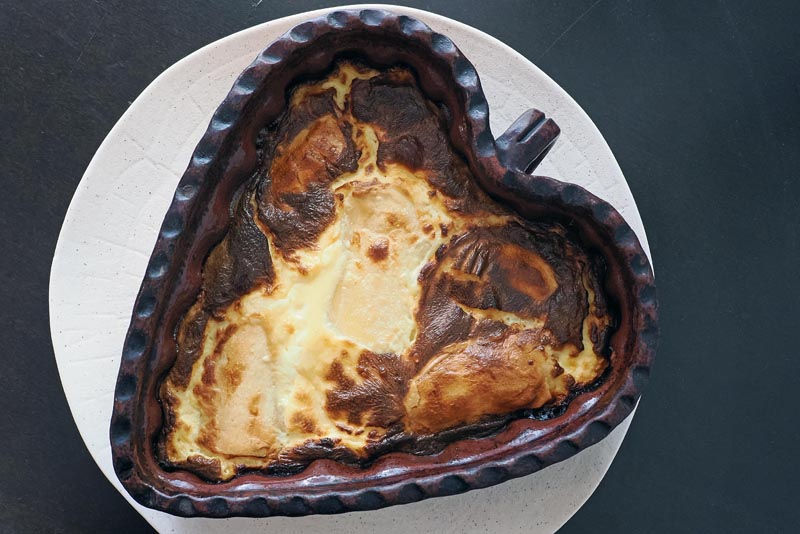
What sets Zelenjak apart from many other picnic spots is that you can taste and make your own štrukli here. The offer also includes a štrukli-making workshop, which is designed as an interactive encounter with tradition. In this experience, the dough is rolled out by hand, without rushing, just like generations before. The filling is prepared simply, but with care, and the moment of rolling the štrukli often becomes the most fun part of the process. When they are finally placed in the oven or a pot, the entire space fills with a smell that takes you back to times gone by.

At Zelenjak, štruklji are not served in a single way but as a gastronomic story that unfolds through different interpretations of the same base. They most often come warm, just out of the oven, with a lightly browned crust and a faint scent of cream that spreads across the table. In another version, they are served cooked in broth, soft and almost tender, with the addition of sour cream that emphasizes their simplicity.

In a modern interpretation, they are transformed into a light appetizer baked with butter, while in sweet versions they reveal completely different dimensions – with walnuts, apples, or homemade plum jam. At times they appear as a more elegant version, gratinated with an additional layer of cream and cheese, and sometimes as a gastronomic surprise with porcini mushrooms. Each variant retains the base, but changes the experience, showing how flexible a traditional dish can be without losing its identity.
Photo: Nikola Zoko


Comments