


Aleksandrović - The Grand Wine Story of Šumadija

In Zagreb, at the Czech House, one of Serbia’s most significant wineries, owned by Božidar Aleksandrović, was presented. The winery is located in the village of Vinča in the Šumadija region. Those attending the presentation included winemaker Božo Aleksandrović, Jelisaveta Aleksandrović, Marketing Director, and Uroš Kostić, Sales Director. More on the presentation itself follows later in the text.
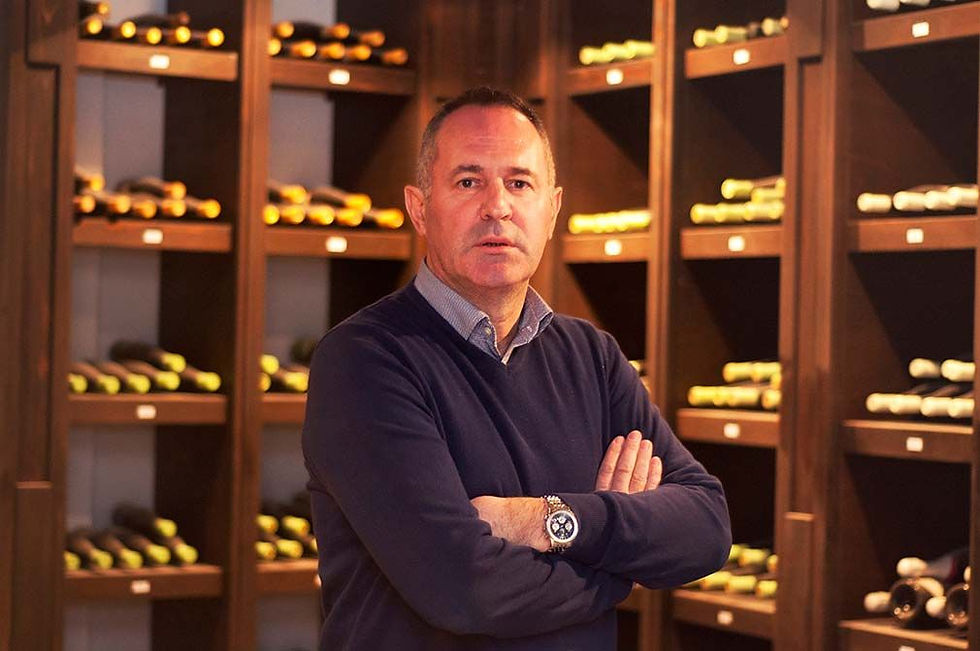
That region, with the town of Topola at its centre, was an important hub of Serbian viticulture in the last century, marked by the large Royal Winery founded in 1931. The Aleksandrović family had been growing vines since the late nineteenth century. Their great-grandfather Miloš was a well-known vine grower in the area and one of the founders of the Vinča Winegrowers’ Cooperative, established in 1903 in the village of Banja, between Topola and Aranđelovac. The work was continued by Božo’s grandfather, Aleksandar “Lesa” Aleksandrović. At that time, on two hectares of land, they cultivated around 20,000 vines, densely planted at one-metre intervals and worked entirely by hand.

After 1945, grapes had to be sold to large state combines such as NAVIP and Rubin, and apart from small quantities for personal use, bottling wine privately was legally prohibited. With changes to the law during the time of Ante Marković, the Aleksandrović family began private wine production and sales. Božo Aleksandrović studied at the Faculty of Agriculture in Zemun in the late 1980s and graduated in 1993. His studies provided the opportunity to revive wine production together with his grandfather Lesa in the 60-square-metre cellar beneath the family home. Though modest in scale, the production was significant: already in 1991, during his third year of study, Božo began making his first wines, and in 1992 they bottled their first Trijumf—a blend of 85% Sauvignon Blanc, 10% Pinot Blanc and 5% Riesling—whose name and production method originate from the Royal Winery beneath Mount Oplenac. This blend had been devised years earlier by the winery’s German oenologist Otto Kabej, whose handwritten notes were preserved by chief cellar master Živan Tadić. The Sauvignon and Pinot provided structure and body, while the Riesling added the necessary acidity.
Tadić later sent Božidar 111 pages of handwritten notes from Canada detailing wine production at the pre-war Royal Winery. “We were self-taught, and these were the beginnings of modern viticulture and winemaking in Šumadija, and indeed in Serbia. The recipe and the first Trijumf from 1992 gave me real momentum, because it is important for wines to have an interesting story behind their creation,” says Aleksandrović.
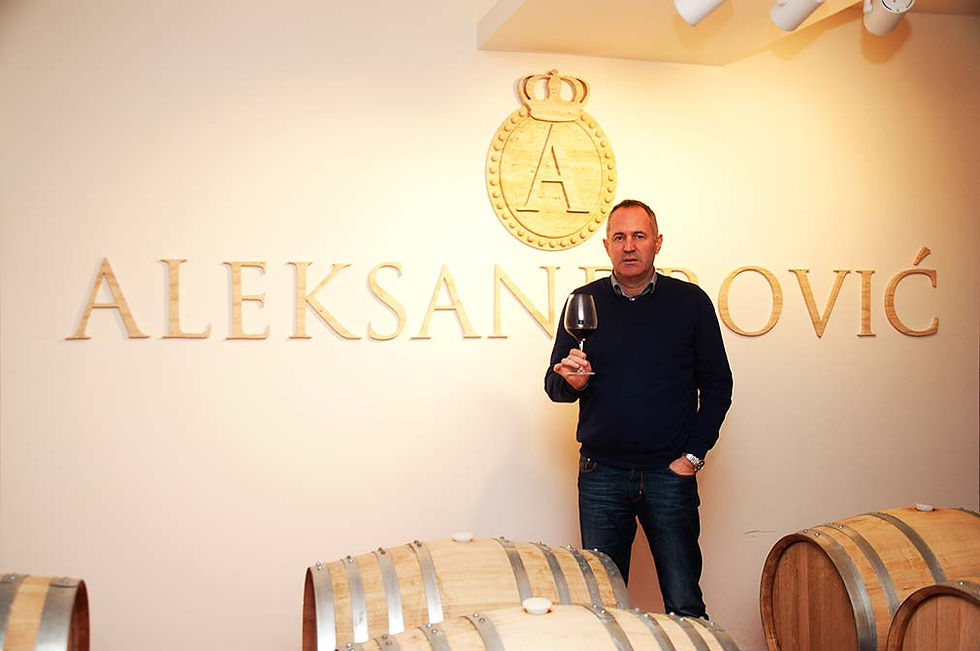
During the 1990s, the winery produced just under 10,000 bottles annually and began entering restaurants in major cities, primarily Belgrade. In the years that followed, Aleksandrović systematically acquired vineyards, as well as arable land and meadows that were converted into vineyards across the wider Topola area. Today, the winery manages 89 hectares of vineyards, yielding around 300,000 litres of wine in an average vintage. Approximately 60% of the vineyard area is planted with white varieties, and over the years the winery has received accolades for a broad range of red and white wines from its portfolio.

The winemaker is particularly proud of Rodoslov, a wine produced only in exceptional years. The first Rodoslov was created with the 2006 vintage, composed of 70% Cabernet Sauvignon, 20% Merlot and 10% of the indigenous Serbian variety Prokupac. The grapes underwent a full 40-day maceration, after which the wine matured for two years in French oak barriques, followed by two additional years in large, used Slavonian oak barrels with a capacity of 4,000 litres. After bottling, the wine rested for another year and was released in 2011. The first Prokupac came from vineyards near Stalać; today the winery cultivates the variety on its own land. The next Rodoslov followed in 2009, and the rest is history. More recent Rodoslovs, such as the 2019 Grand Reserve, consist of 70% Cabernet Sauvignon, 20% Merlot and 10% Cabernet Franc.

A pivotal year in the winery’s development was 2002, when production moved from the family cellar to the current winery premises, initially occupying a single room measuring 12 by 12 metres. This marked the beginning of a more modern production process, including the acquisition of the first stainless-steel tanks to enable controlled fermentation and all procedures required for producing high-quality and premium wines. Construction and expansion continued gradually until 2017, resulting in a winery that now covers more than 3,000 square metres.
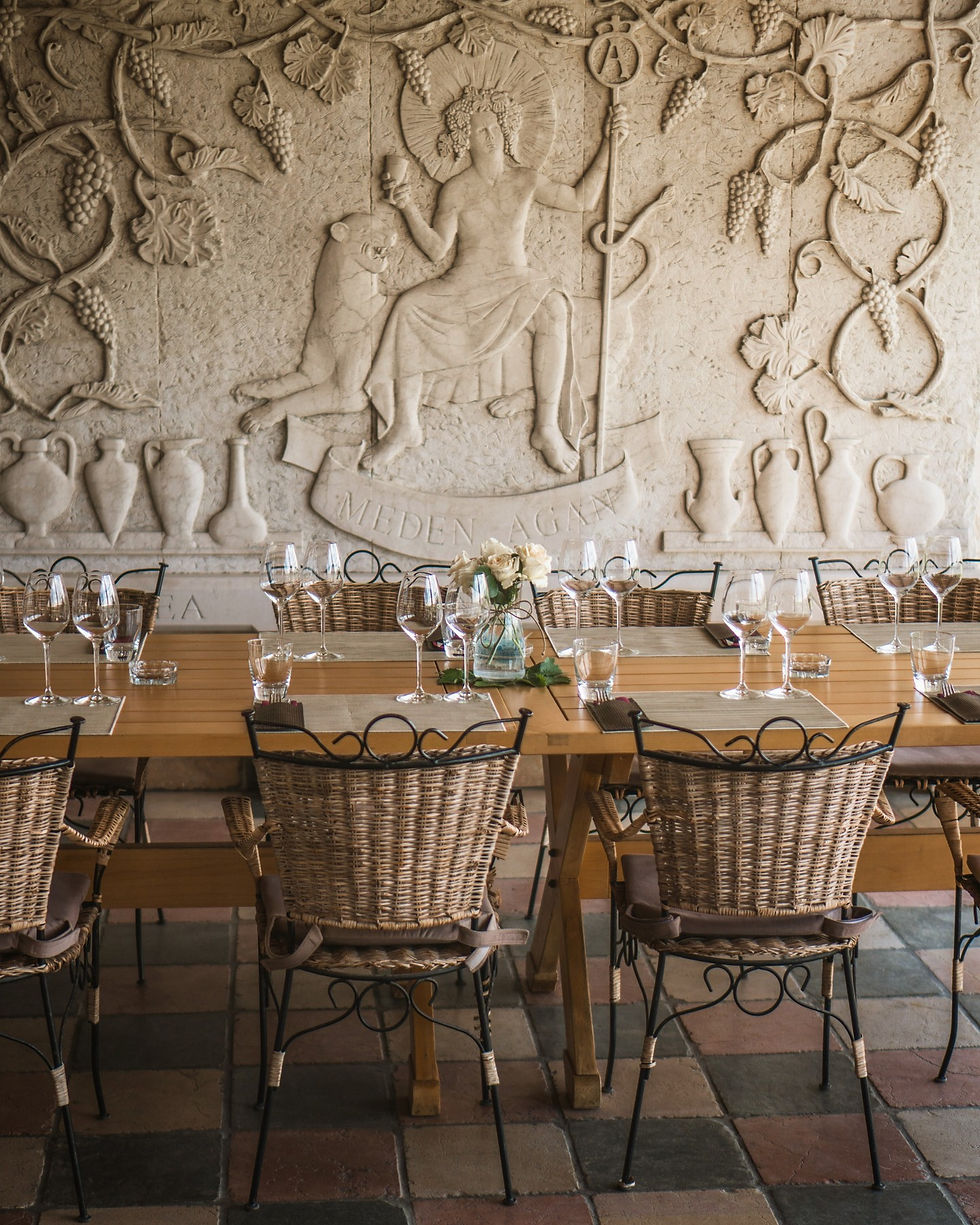
The upper level houses an elegant tasting room with the capacity to serve quality food, dominated by an impressive stone relief of Bacchus (Meden Agan of Vinica) by artist Vladan Martinović. In the cellar stands a sculpture of Bacchus by sculptor Nebojša Savović Neša. It is clear that the winemaker has sought to make the space of fine wine also a space for art.
Adjacent rooms feature black-and-white photographs of the family and notable figures from Topola, as well as a conference hall and a shop offering the winery’s full range of wines. There are currently 23 labels in production, among the best known being Trijumf Chardonnay, Trijumf Rosé, Trijumf Noir, Harizma Selection, Trijumf Gold, Regent Reserve, Rodoslov Grand Reserve, Prokupac Kameničarka and Vožd.
In addition to the white Trijumf, the winery again highlights Rodoslov, produced only in exceptional years. The first Rodoslov, from the 2006 vintage, was composed of 70% Cabernet Sauvignon, 20% Merlot and 10% Prokupac. After 40 days of maceration, the wine matured for two years in French oak barriques and a further two years in large used Slavonian oak barrels. Following bottling, it rested for another year and was released in 2011. The first Prokupac originated from vineyards near Stalać, while the next Rodoslov appeared in 2009.

The winery is planning to expand its accommodation facilities. The existing 14 rooms within the winery complex and vineyard cottages with pools at the Bor and Meterizi sites are to be complemented by a wine hotel (Wine Resort, approximately 3,000 m²) near the winery, featuring 24 rooms, a wine bar, cigar bar and meeting spaces. I had the opportunity to see the building in its shell stage during a visit in May, with completion planned within two to three years. Aleksandrović emphasises that there will be no rush, both for financial reasons and to ensure the highest construction and service standards. These plans are well considered: the winery already welcomes between 12,000 and 13,000 visitors annually, a figure that could double with the new accommodation.

Aleksandrović was also the first president of the Šumadija Winemakers’ Association, founded in 2013. The association initially had 14 founding members and now comprises 35 wineries, around 20 of which are located in the Topola and Aranđelovac area. The winery is highly successful in export markets, with more than 20% of production sold in 21 countries worldwide. A significant share goes to Asia (Japan, China, Hong Kong), followed by Western Europe, Russia and the United States. “Asian countries are a promising market for us, very strong in terms of placement and pricing. At the same time, our wines are European products for them, without political or other barriers,” says Aleksandrović.
To date, Aleksandrović Winery has won at least 200 awards domestically and internationally. These include Sakura Japan 2017 – Rodoslov 2009, Grand Gold Medal; gold medals for Regent 2012 and Trijumf Gold 2015; Japan Wine Challenge 2017; Decanter World Wine Awards London 2022 – Regent 2018, Gold; Decanter WWA 2024 – Vožd 2017, Gold (among the world’s top 15 Cabernet Sauvignons); Mundus Vini Germany 2022 – Vožd 2017, Grand Gold and Best in Show; AWC Austria 2013 – Rodoslov 2005, Gold; numerous gold medals at Emozioni dal Mondo Merlot e Cabernet Insieme in Bergamo; victories at Sabatina in Neum 2016; wins in Ljubljana; and most recently at the Wine Vision by Open Balkan fair in Belgrade, where Rodoslov 2019 received a Platinum Medal with 96 points as the highest-rated Serbian red wine. Of the 24 judges, five held the title of Master of Wine.

At the workshop “Vrijeme je ZA…”, we tasted nine wines: Trijumf Noir Sparkling 2022, Trijumf Rosé 2019, Oplen Riesling 2024, Trijumf Selection 2024, Harizma Selection 2024, Trijumf Terroir 2023, Prokupac Aleksandrović 2021, Regent Reserve 2020 and Rodoslov Grand Reserve 2020. The wines were analysed and presented by sommelier Darko Lugarić, while Božidar Aleksandrović spoke in detail about their origins, vineyard sites and grape varieties. Detailed information is available on the winery’s website, so here I will focus on three wines: the opening sparkling wine, Trijumf Terroir and Prokupac.

Trijumf Noir 2022 (12% ABV) is a sparkling wine made using the traditional method. Crystal clear, with a greenish-yellow colour and golden highlights, it shows fine, persistent bubbles, expressive fruit character and a rounded palate, with aromas of green apple, peach and citrus. Balanced acidity makes it refreshing and approachable. According to the winemaker, malolactic fermentation was carried out on 50% of the wine, and it spent 20 months on the lees. The grapes come from vineyards on Mount Bokanji, on limestone soils rich in minerals and well ventilated. The winery’s recommended retail price is €16.

Trijumf Terroir 2023 (13.5% ABV) is light yellow with greenish reflections. The aroma is intensely rich, with notes of pineapple, vanilla, butter and toasted bread. On the palate it is creamy, with herbal nuances and a long finish. It matured for six months in Radoux oak, followed by two months in stainless steel and a further two months in bottle before release. It is recommended with white fish, veal, turkey and mushroom risotto. A discussion arose regarding the timing of its release (Suhadolnik), as the wine has ageing potential and could develop an even richer, creamier profile over time. The winemaker is aware of this, but due to strong demand the wine is released after just ten months. The blend consists of 85% Chardonnay and around 15% Sauvignon Blanc and Riesling.

Prokupac Aleksandrović 2021 (14% ABV) has an attractive ruby colour, deeper than Pinot Noir. On the nose it shows ripe sour cherries, cherries, cinnamon and vanilla, while the palate is rich and harmonious, with notes of black cherry, currant and a herbal touch. The tannins are soft, silky and well integrated. Prokupac is an indigenous Serbian variety, with Oplenac being its traditional growing area, where it is also known as Kameničarka and Rskavac. The winemaker explained the early defoliation process required because the variety struggles to achieve phenolic ripeness. During the relatively short maceration of around ten days, green seeds are removed from the bottom using a special knife. The wine matured 70% in Slavonian oak and 30% in barriques.
The workshop was very well attended, with more than thirty participants, and highly interactive, with Nenad Trifunović and Željko Suhadolnik playing significant roles. The Aleksandrović visit once again confirmed the winery’s importance not only within Serbia but across the wider Balkan region. Božidar Aleksandrović has succeeded in continuing the tradition of the Šumadija terroir and elevating the quality of wines from his region. Alongside Mija Radovanović, he is one of the leaders of the modern Serbian wine renaissance, which in recent years has moved beyond the Balkans. Clean, precise and clearly oriented towards the future, as he himself says: “We are a team of reliable collaborators. Our oenologist Vlada Nikolić has been with us for over 20 years, as have many others, from cellar masters to the rest of the winery staff.”


Ik zie de georganiseerde relatie tussen implicaties en indicaties. De proportionele focus op verifieerbare indicatoren wordt door het gesprek heen gehandhaafd. De pagina biedt meer gedetailleerde uitleg van het probleem. Betrokkenheidsmodellen worden gecontextualiseerd via interactieve digitale platforms.