


Gastronomy in the Castles of Posavje

Do you love castles—their history, but also the modern transformations that have turned former fortresses into irresistible museums, galleries, and restaurants? Then don’t miss the first Posavje Castles Festival in our neighbouring region. The festival brings together as many as eight castles in Slovenia, located just a few dozen kilometres from Zagreb and accessible even without a vignette. Everything begins on 10 April at Sevnica Castle with a concert and a night-time tour, and concludes on 17 April 2026 at Rajhenburg Castle with a unique walk through the past, featuring the first part of a medieval trilogy.

“Posavje Castles Festival is more than a traditional cultural event. It is an experience—a blend of concerts, theatre performances, guided tours, wine tastings, and family-friendly activities. Each day offers a new story at a different location, allowing visitors to explore the region in a layered and authentic way. This initiative is the result of long-standing cooperation between castles and destinations dating back to 2014, when we began developing a shared tourism story. Its innovation has even been recognised with the prestigious Jakob Award,” said the organisers. In addition to Sevnica Castle and Rajhenburg Castle, the festival will also present Brežice Castle, the Božidar Jakac Gallery, Mokrice Castle, Podsreda Castle, and the ruins of Kunšperk and Svibno, whose remains provide a beautiful backdrop for numerous local events.
Sevnica Castle is one of the most charming historical sites in Posavje, with origins dating back to the Middle Ages. It was first mentioned in written sources in 1309 as Castellum Lichtenwalde, although it likely existed a century earlier. Built by the Archbishopric of Salzburg to oversee an important trade route along the Sava River, it held strategic importance throughout history. Over the centuries, the castle changed ownership, passing through notable noble families such as Moškon, Drašković, and Auersperg. It served both as a residence and as a summer retreat for wealthy and influential families. A particularly fascinating period is linked to its last owner, Countess Mathilde Arco-Zinneberg, who lived there between 1910 and 1940. Her story still gives the castle a unique emotional and historical character, especially experienced during night tours.
After the Second World War, the castle was nationalised and used as social housing, but was later gradually restored and transformed into a cultural and tourist centre. Today, it is owned by the municipality and hosts events ranging from weddings and concerts to theatre performances, as well as a special grape harvest on the southern slopes, where a vineyard of 500 Blaufränkisch vines is tended by their “godparents”. Nearby stands the Lutrovska Cellar, once a tomb and storage space, now a unique concert venue with excellent acoustics, featured during the popular “Sevnica Castle Summer” festival.
The festival opens here on 10 April with a performance by the Slovenian Flute Orchestra, offering a unique musical experience featuring various types of flutes accompanied by double bass, piano, and percussion, with special emphasis on the piece Circus Flautasticus. Admission is free.
In the picturesque town of Kostanjevica na Krki—the smallest town in Slovenia—lies a unique monastic complex included in the festival programme on 13 April. The Božidar Jakac Gallery is located within a former Cistercian monastery founded in 1234 by Duke Bernard of Spanheim. The monastery operated until 1786, when Emperor Joseph II abolished it. It later served administrative purposes and gradually declined during the 19th century until restoration began in the 1950s. The oldest part of the complex is the church dedicated to the Virgin Mary, one of the finest examples of early Gothic architecture in Slovenia, later enhanced with Baroque elements. The monastery acquired its present appearance in the 18th century, including an impressive arcaded courtyard—one of the largest in Central Europe. Opened as a gallery in 1974, it is now a major centre for modern and contemporary art, housing works by prominent Slovenian artists such as Božidar Jakac, the Kralj brothers, Janez Boljka, and Bogdan Borčić. It also features the Pleterje collection of Old Masters.
Mokrice Castle dates back to 1444 and acquired its Renaissance appearance in the 16th century. Located 8 km from Brežice, on the site of a former Roman fort, it has a rich and turbulent history marked by changing ownership, Ottoman incursions, and German occupation during the Second World War. After the war, it was nationalised, and since 1952 it has developed a hospitality function. Today it is a restored four-star hotel, surrounded by an 18-hole golf course spanning 70 hectares, and features one of the few preserved drawbridges in Europe. Legends are also associated with the castle, including the story of a raven that warned of Ottoman danger and became part of the castle’s coat of arms.
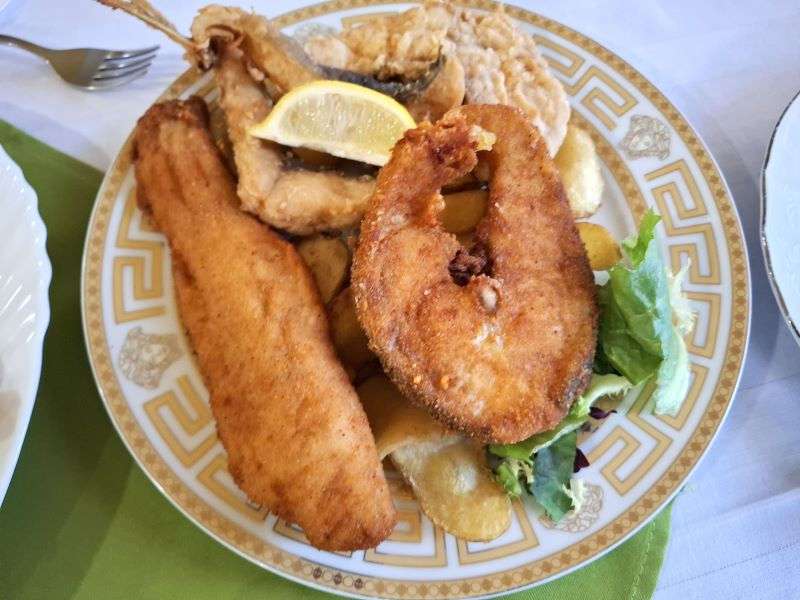
Beneath this emblem lies Restaurant 1444, located in the castle tower, offering daily meals that combine history with local ingredients. The Knight’s Hall hosts a special gastronomic experience inspired by medieval feasts, where guests dine by hand on dishes such as duck, goose, rabbit, fish from the Krka River, fruits, vegetables, and wine. The experience includes entertainment by court characters and is limited to small groups (reservation required). On 14 April, the castle opens its doors with a special programme including a guided tour with Countess Barbara, a welcome drink, exploration of hidden corners, a day of golf, and a culinary experience at Restaurant 1444.

Brežice Castle, built in the mid-16th century on the site of an earlier fortress destroyed during the peasant revolt of 1515, is one of the region’s most important historical buildings. Its origins date back to the 13th century, when it served as a defensive and administrative centre for the Archbishopric of Salzburg.
Over time, it came under Hungarian and Habsburg rule and endured wars, fires, and Ottoman attacks. As part of the Military Frontier defence system, it was rebuilt in Renaissance style with towers and walls. Later, noble families transformed it into a Baroque residence, featuring a richly decorated Knight’s Hall, staircase, and chapel. Today, it houses the Posavje Museum, showcasing the region’s history shaped largely by the Sava River.
Nearby stands the Brežice Water Tower, built in 1914 and one of the town’s most recognisable landmarks. Standing 46 metres tall, it supplied water until 1983. Today it is the only water tower in Slovenia fully open to visitors, now transformed into a modern interpretive centre with eight floors and a panoramic viewing platform offering 360° views. During the festival on 16 April, visitors can enjoy free entry, Baroque-themed activities, workshops, guided tours, and an evening concert featuring works by Beethoven.
Rajhenburg Castle is one of the oldest in Slovenia, dating back to the 12th century. Over time, it has served as a noble residence, a Trappist monastery, and even a women’s prison during and after the Second World War. Today, it has been carefully restored into a cultural centre.
Visitors can enjoy a variety of attractions, including the Peninoteka wine cellar, where premium sparkling wines from Posavje are served through guided tastings. This offering builds on the Trappist tradition, as monks here began producing sparkling wine and chocolate. Visitors can learn about chocolate-making and even participate in workshops organised by the Kunej family.
Ova ponuda nadovezuje se na tradiciju trapističkih redovnika, koji su upravo ovdje započeli proizvodnju pjenušca i čokolade o čijoj priči i načinu pretvaranja čokolade u ukusne praline možete naučiti na prekrasnoj radionici u organizaciji kuće čokolade i vina obitelji Kunej. Gastronomski doživljaj dodatno upotpunjuje restoran A3, u kojem se lokalne namirnice interpretiraju na moderan način, često uz priču o povijesti i tradiciji kraja. Posjetitelji mogu sudjelovati i u raznim radionicama, uključujući izradu čokolade inspiriranu slavnim brendom Imperial, čime dvorac postaje interaktivno mjesto učenja i zabave.
The A3 restaurant enhances the gastronomic experience by interpreting local ingredients in a modern way, often accompanied by stories of the region’s history. A highlight is the “Medieval Trilogy”, an innovative theatrical cycle combining humour, improvisation, and audience interaction to bring historical characters to life.
On 17 April, visitors can take part in a “Walk into the Past”—the first part of the trilogy—featuring immersive theatre with guided tours and live actors. Participation is free with prior reservation.

The five castles mentioned are only 70 kilometers away from Zagreb and can all be visited without a Slovenian vignette. In addition to them, another renovated castle, Podsreda Castle, and two ruined castles whose scenery inspire travelers to explore are participating in the festival. So on Sunday, April 12, at Svibno Castle, visitors can enjoy a cultural program, castle ruins, music, and legends of the region. Saturday, April 11, brings a visit to Kunšperk Castle, with a tour of the ruins and a beautiful view of the Kunšpersko polje. On Wednesday, April 15, Podsreda Castle, a 12th-century castle and the "most awarded" castle in Slovenia, is preparing a rich program with attractions such as a permanent art collection and exhibitions dedicated to history and art. As part of this festival, it is preparing a lecture on history and art exhibitions in the medieval fortress, providing a unique experience of culture, history, and local heritage of Posavje.

“The castles of Posavje are a story that needs to be seen, tasted and heard.” - conclude the organizers, aware that this festival is an opportunity to offer lovers of weekend trips and excursions excellent content and an experience that involves all the senses. Both during the festival and throughout the year.
photo: Nikola Zoko and promo


Comments