


Primošten in a Glass - Wine Tasting Gracin

Primošten has long been an address where summer is a given, but in recent years it has also become a place where people are increasingly looking for a glass of good wine, a snack to go with it, and an atmosphere that is not just a passing backdrop. It was precisely on this idea that the Gracin Wine Tasting Room was developed, a place that was not conceived as a classic wine bar or as another tourist stop, but as a space in which Dalmatian wines and snacks are presented in a relaxed manner, but with a clear idea and a wealth of wine knowledge.
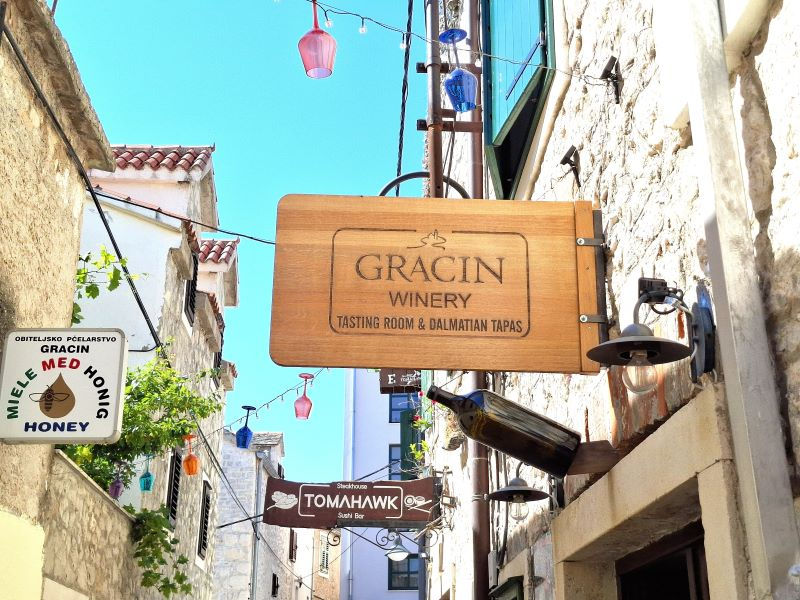
Although the Gracin winery is not in Primošten, but in Vodice, it turned out that Primošten was a logical step for spreading the story. In addition to the fact that the winemaker Leo Gracin is a Primošten native, a professor of enology and president of the Dalmatian Wines Association, it was necessary, as he says, to create a place where he could receive partners, friends, guests, and wine lovers, but also to offer something that did not exist in this form in the town, a tasting room with a carefully composed wine list and Dalmatian snacks that make sense with a glass.

For centuries, the Primošten region has been marked by the cultivation of Babić, a variety that has produced some of its most recognizable wines on Primošten's sparse, rocky soil, and the scenes of stone vineyards above the sea are almost as much a trademark of Primošten as its old town. Grapevines have always been grown here in difficult conditions, on dry stone walls and small plots exposed to the sun and the bora wind, so the wine grew not only from tradition but also from the perseverance of people who literally created a vineyard from stone. In Primošten, a glass of wine becomes a story about the landscape, work, family and one of the most important Dalmatian wine heritages.

The space where the tasting room is located today already existed, but it took a lot of intervention to get its current form. Previously, it was more oriented towards summer and the outside, while the interior served primarily as a utility space. The new concept required a different logic, so the interior was adapted to accommodate guests inside as well, especially when the weather is not ideal or when a quieter place for tasting is needed. The result is a space that is not pretentious, but has character: intimate enough for tasting, relaxed enough for a glass of wine in the middle of an evening walk, and yet serious enough to make a real wine and food pairing.

At the heart of the offer are, of course, the wines of the Gracin winery. The emphasis is on Babić, a variety that is almost a matter of identity in the Primošten region, and along with it, on other labels from the house. In the tasting room, you can taste three of Gracin's key wines: Babić, then Kontra, a Dalmatian blend that combines Babić, Plavac and varieties from the Zadar hinterland, and Babić prosecco, a wine that stands out here with particular pride.

However, the tasting room was not conceived as a monologue of one winery. On the contrary, the idea was to present the wider Dalmatian context alongside Gracin's wines, so the offer also includes labels from winemakers and friends with whom the collaboration has developed over the years. Here you can taste Crljenak by Ivica Kovačević, a winemaker whom the hosts call one of their mentors in the wine business, as well as Kiridžija wines, Birin wines, Marija Radić's label from Pelješac, and Pošip Grgić wines.

In other words, the tasting room also functions as a small cross-section of Dalmatian styles - from lighter and fresher wines to more serious white and red labels. There are also rosés, and the menu is arranged so that the guest can taste multiple styles and multiple regions of Dalmatia in one place, without feeling like they have entered a catalog. Everything seems quite natural, more like a conversation between people who love wine than a strictly programmed tasting.
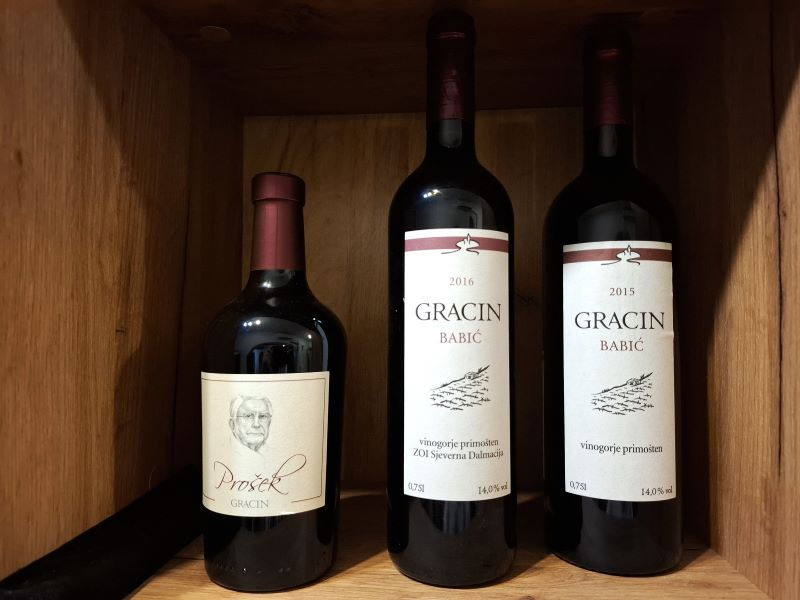
One of the things that is openly discussed here is the fact that red wines are sold more difficultly today than before. In tourist resorts, fresher, lighter and simpler wines dominate in the summer, so more serious reds need to be brought closer to the guest. That is why the tasting room tries to take red wines out of the formal framework and offer them in a more relaxed format with a small snack, through a story, in flights and in combination with local products.
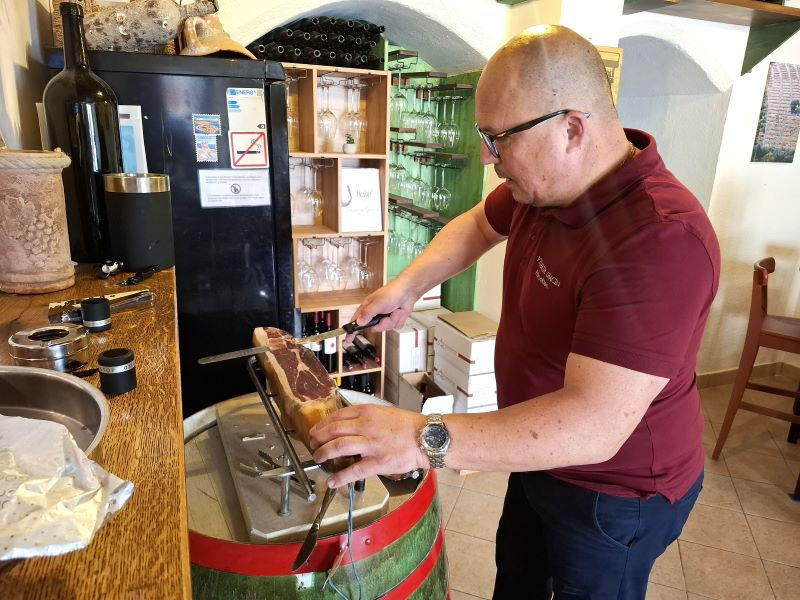
This is perhaps one of the more interesting aspects of the whole place: it is not just about pouring wine, but also about trying to explain to the guest why Babić is important, what a Dalmatian blend means, why prosecco is more than a dessert wine and how all of this goes well with food. The Gracin tasting room is not a restaurant, but the food here is not just an incidental accompaniment. On the contrary, one of the most pleasant details of the concept is that a small snack comes with every glass or bottle ordered, and for those who want a more serious experience, there are guided wine & food pairing programs with three, four or five wines and a corresponding sequence of snacks.

These snacks do not pretend to be haute cuisine, but rely on what makes the most sense in a space like this: cured meats, cheeses, pâtés and small cold snacks that accompany the wine, not compete with it. It is in this simplicity that the tasting room strikes a good tone, it is tasty and thoughtful enough to be special, yet unencumbered enough not to seem stiff.

The focus is on local cured meat products from Dugopolje, produced by Smjeli. Their Mosor sausage and other meat snacks are part of the tasting room's attempt to move away from the generic tourist fare and offer something with a local and regional character. The menu also includes a reinterpreted version of Komiža pogača, as well as a series of small "bites" that give the guest the feeling that they are tasting a piece of Dalmatia with their wine.

It is interesting that the tasting room even thought a lot about what to call the food served with wine. Are they snacks, meze, marenda, tapas, bites? A seemingly trivial question, but one that says a lot about today's gastronomic scene on the Adriatic, which is still searching for a common language between local heritage and an international audience. In the end, they decided on a term that would be the most understandable to foreigners, although, as they admit, there was a lot of discussion behind it. And in this, the entire philosophy of the place can be seen: to remain Dalmatian, but to be understandable to a guest coming from outside.

What makes the Gracin Wine Tasting Room interesting is not only that you can drink a glass of Babić in Primošten. It is interesting because it acts as an extension of a broader wine story, made up of friendships, collaborations, varieties, regions and years of work in the wine world. What is offered here is not just a “glass of wine with a view”, but an attempt to tell the contemporary Dalmatian wine story in one place, from Primošten and Babić, through Pelješac and Pošip, all the way to the snacks from Dugopolje and Komiža pogača, because Leo Gracin’s mother is from that very place on the distant island of Vis.
For a guest, this means a very simple thing: if they are looking for a place in Primošten where they can taste several faces of Dalmatia, drink good wine and have a nice snack along the way, Kušaonica Gracin is one of those places worth stopping by without much notice and without an excessive plan. All you need is a free evening, a little time and the will to let the summer slow down for a while with a glass of Babić, a piece of cheese and a few good stories behind the bottle.


Comments