


Vina Plovanić: Top Quality Belica

In Kastav, wine is not only drunk from a glass. It is remembered, recounted and inherited there. In old taverns, among stone walls and wooden tables, wine has been a part of everyday life, hospitality and local identity for centuries. Today, this story is continued by Dejan Rubeša, owner of the Plovanić winery, a man who created one of the most important contemporary wine stories of the Kastav region from the family's love for taverns and wine.

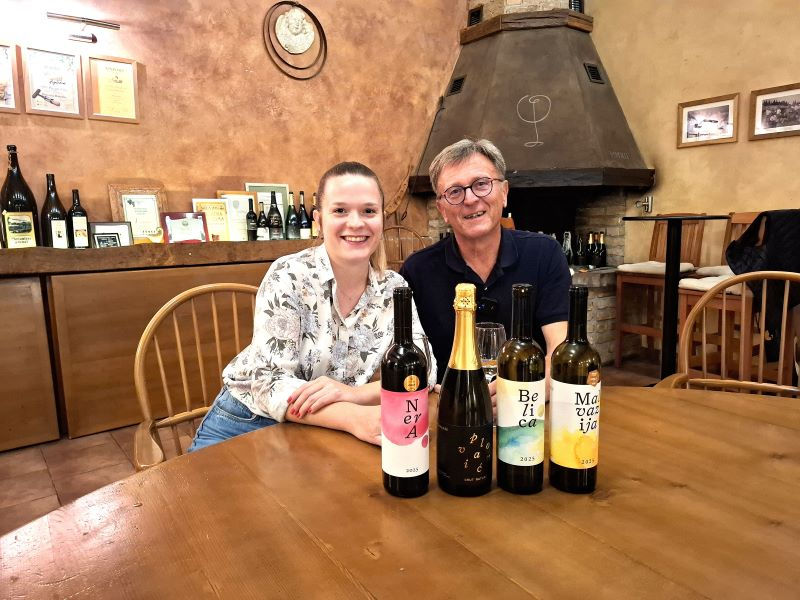
His winery is located in the Kastav area, in a space that is not only designed for wine production, but also for meetings. Below the tasting room is the tavern, a place of gathering and wine production. In winter, the space is heated by a fireplace and underfloor heating, and in summer it opens up to guests and visitors. Everything here is subordinated to the feeling that wine is not an isolated product, but an occasion for conversation, meeting and returning to something that already existed in family and local memory.
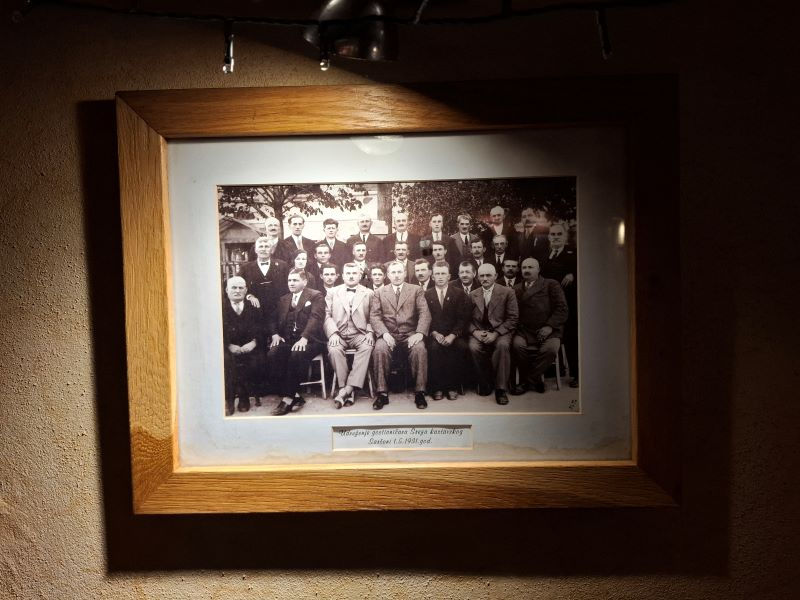
And this memory in Rubeša's family reaches far into the past. “Winemaking runs through our family’s veins,” says Dejan Rubeša. His birthplace is two kilometers south, and the year 1875 is engraved on the tavern there. The tavern, he explains, has always been the center of family life. His late father’s friends, business partners, and random passersby gathered there. The space once contained a small table and two leather armchairs – one for the host, the other for a guest who happened to drop by. “The tavern has always been the center of everything, the center of life and all events,” says Rubeša.
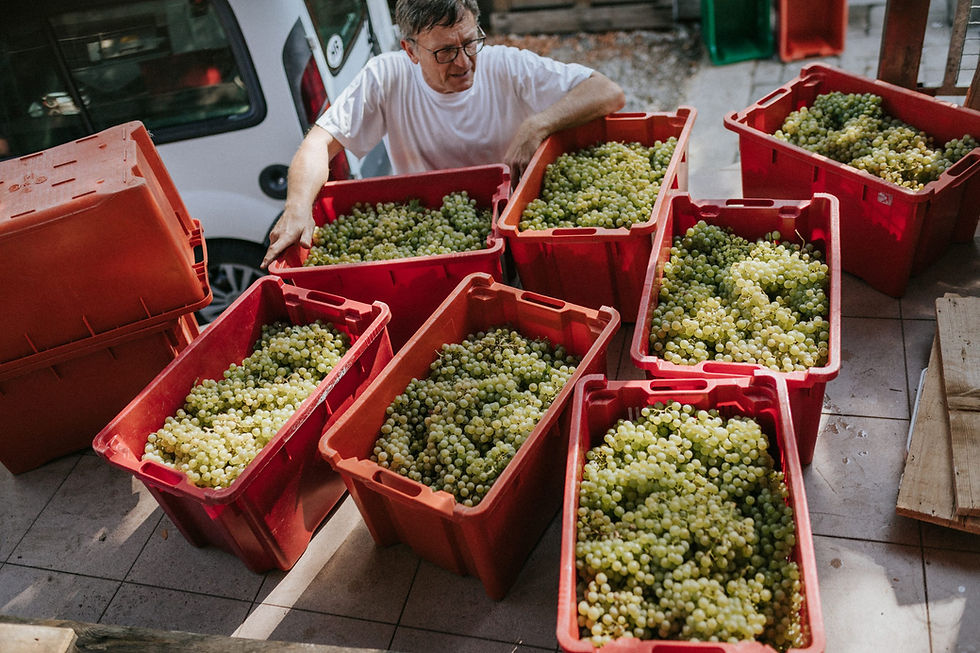
Although the house that today houses the Plovanić winery did not have a direct tradition of viticulture and winemaking, Rubeša brought his own passion to it. Since 1990, he has begun to transfer the experience, knowledge, and love for the vineyard that he acquired from his earliest childhood to this space. "I've been involved in wine, vineyards and cellars since I was born. At first it was just a hobby, but over time I became more and more interested in the story. The quantities grew, the vineyards and cellars grew," he says. Today, Plovanić is the largest winemaker in the Kastav region, according to the number of plantations and the amount of his own production. In absolute numbers, this production is still small compared to large Croatian wineries, but it is precisely this small scale that determines the character of the whole story.
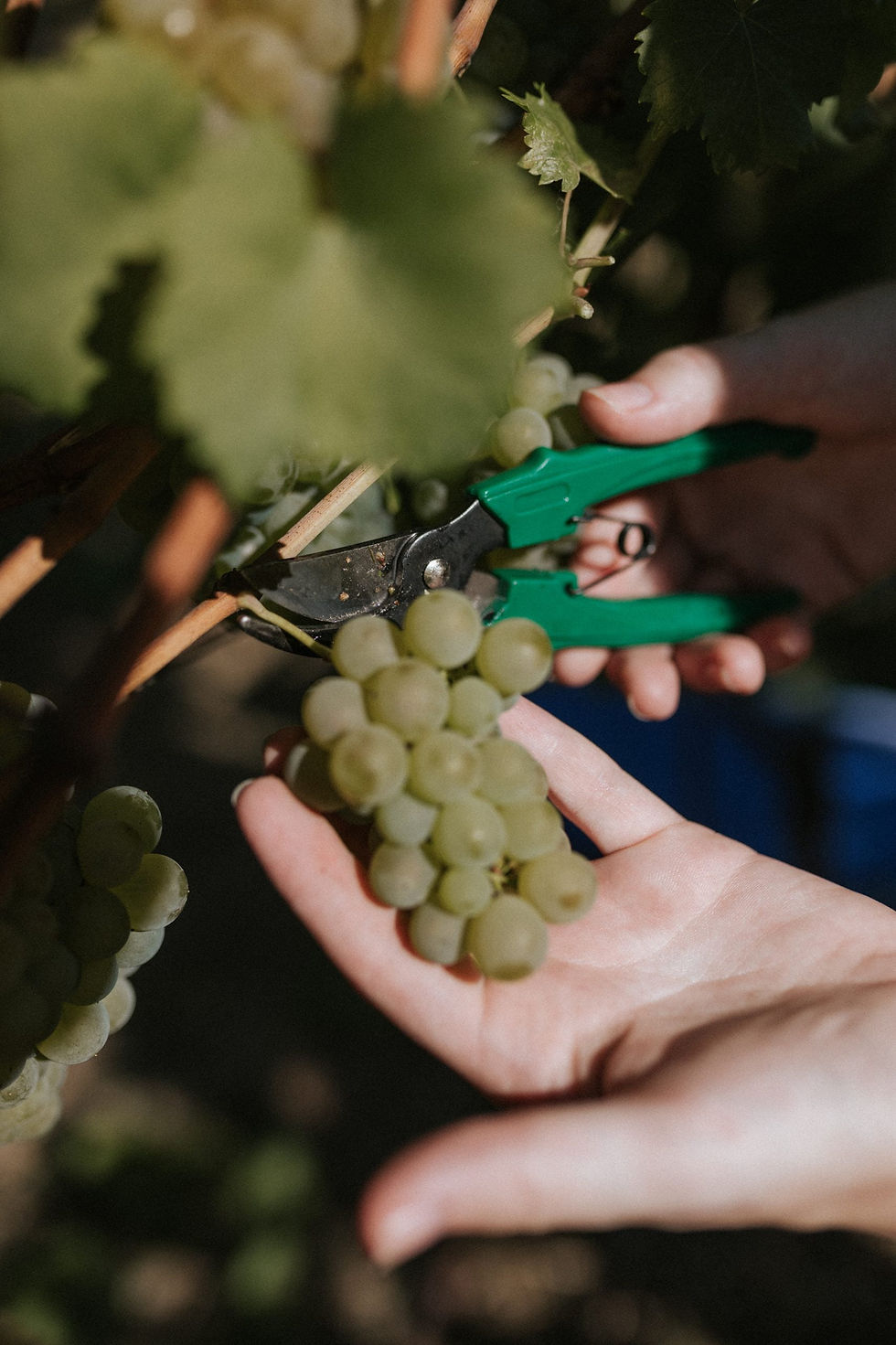
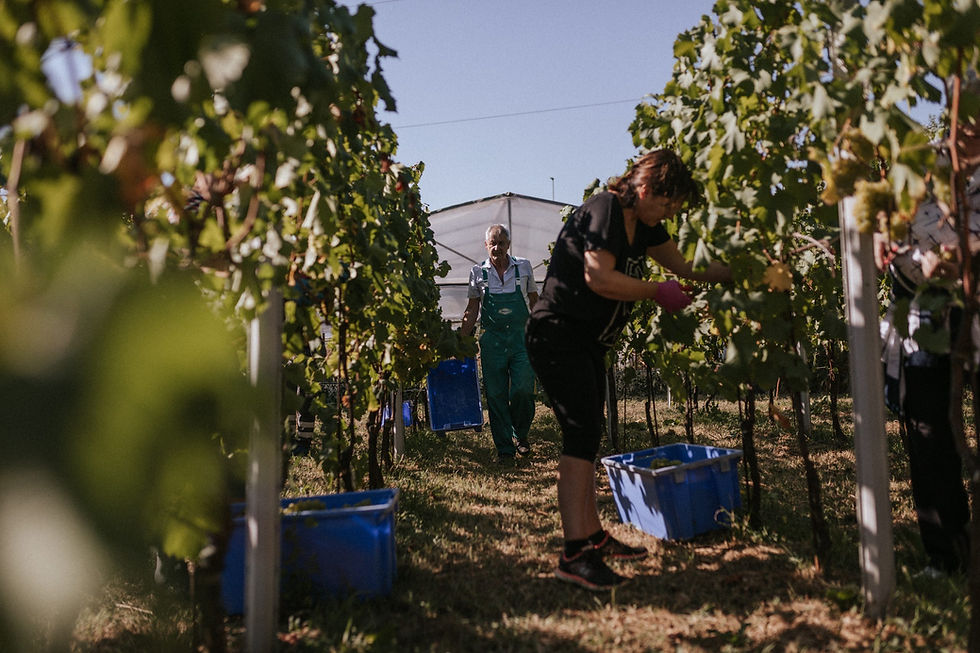
Today, the winery cultivates a little more than a hectare of Belica, spread over five different locations. The largest vineyards are located a few hundred meters south of the tasting room, on the approach to Kastav from the Opatija and Rijeka directions. These are the two largest connected areas under vines in the Kastav region. However, Kastav's vineyards are not easy to cultivate. The land is fragmented, the plots are small, and the terrain is demanding. Mechanization is often difficult to apply, so most of the work is done manually. "More is lost in moving than in spraying," explains Rubeša. This terrain configuration is both a problem and an advantage. A winegrower in five separate locations does not lose everything if one is affected by hail, disease or some other weather event. However, each location requires a separate approach, and each vine requires additional attention. Rubeša believes that locations above 300 meters above sea level are particularly valuable. There, the plant can cool down during the night and recover from daytime temperatures, which is becoming increasingly important in conditions of climate change. “We have already entered deep into what we call the new normal today,” he says.
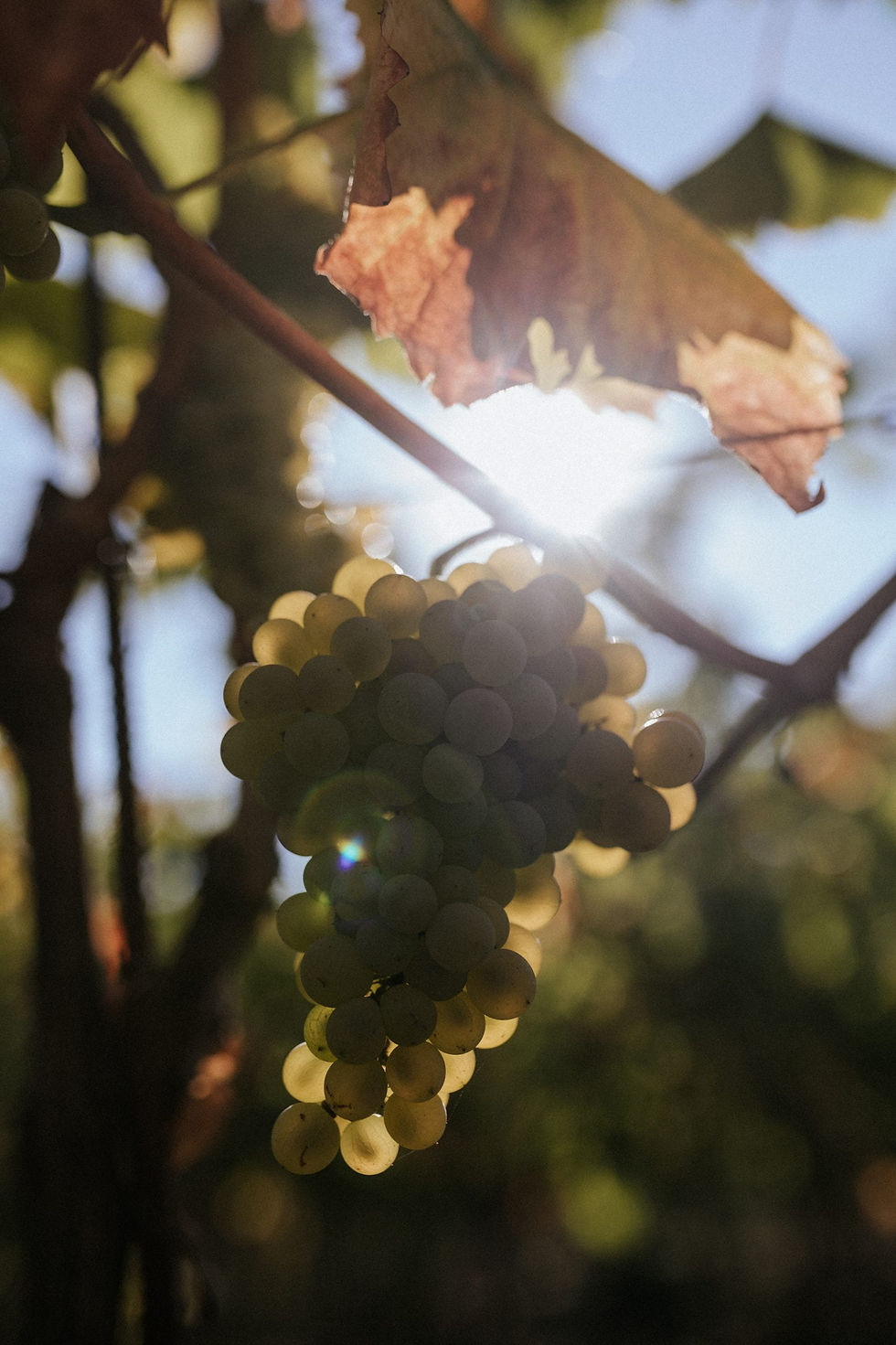
The central story of the Plovanić winery is Belica. For those who do not know it, Belica is not a single wine variety, but a unique white blend. It traditionally contains Mejsko, Divjaka, Verdić, Jarbola, Istrian Malvasia and Brajkovac. The four varieties are indigenous to the narrow area of Kvarner and Liburnia. According to expert research, such a combination does not exist anywhere else in the world. In 2009, the Faculty of Agriculture of the University of Zagreb, led by Professor Ivan Maletić, became involved in the story of Belica. Until then, local people knew that they had a “Belica vineyard”, but the composition of the plantations was often not precisely discernible. The varieties grew together, as old winegrowers had planted them, and few people had systematically researched what was actually in that traditional blend. Maletić, Rubeša recalls, immediately recognized the potential. “He told us: people, you have a great story. This blend definitely does not exist anywhere in the world.”
A three-year project of economic evaluation of the indigenous wine varieties of the Kastav region followed. The project was supported by the City of Kastav, the Municipality of Matulji and the Primorje-Gorski Kotar County, and Rubeša’s vineyards were included in the research. In order to better monitor and analyze individual varieties, Rubeša decided to plant a controlled vineyard. Each component of Belica was planted separately. This made the work in the vineyard, as well as the subsequent analysis in the cellar, easier. From 2015 to 2018, Belica was monitored by individual components. The University of Rijeka, namely the Department of Biotechnology, under the leadership of Professor Pavelić and Professor Sandra Kraljević Pavelić, also joined the research. Belica was analyzed in a way that no other wine had been before.
One of the most dramatic episodes in the story of Belica concerns the divjak. When the family began preparing controlled planting, Rubeša toured the villages of the Kastav region and the area towards Lisina, looking for remaining examples of old vines. He found a dozen or so living vines. “The divjak was on the verge of extinction,” he recalls. Today, there are between 700 and 800 divjak vines in his vineyards. In the meantime, the Belica association has also joined in the restoration, and several hectares of new plantations have been planted in the Kastav region. For large wine-growing regions, this area would be almost negligible. In the Kastav area, however, it represents a huge undertaking. Until 2010, Rubeša says, vineyards were mostly cleared or just being maintained. As generations of old winegrowers passed away, their plantations also declined. Planting new vineyards therefore meant not only starting production, but also an attempt to save genetic and cultural heritage. The story of Belica tells of a variety that lived on the verge of oblivion for decades and of a community that decided to make it visible again.
Rubeša does not attribute the restoration of Belica only to individuals. He believes that four important “lucky events” occurred in Kastav that enabled the local wine story to come back to life. The first is the Belica association, founded in 2004. It brought together winemakers, winegrowers and wine lovers, organized education, visits to other wineries and the exchange of experiences. In the association, Rubeša says, people were given the opportunity to learn and spread their knowledge. The second is local self-government. The city of Kastav recognized the potential of the project and supported the restoration of the vineyard. The third is Neno Kukurin, a restaurateur and wine connoisseur who opened the doors of the serious wine world to Kastav winemakers. The fourth is the support of Vlado Krauthaker, one of the most important Croatian winemakers. After his guest appearance in Kastav and a conversation about wines, Rubeša heard a sentence that he still remembers today: “Writers write about wine and vineyards and poets sing, but only a fool plants a vineyard.” That sentence, Rubeša says, contained the whole truth about viticulture. Whoever plants a vineyard agrees to decades of work, waiting, risk and sacrifice. A vineyard is not a project that can pay off quickly. It is a commitment to the future.
Belica was once a wine that people laughed at. It was associated with Bela nedeja, must and ancient customs, but not necessarily with serious wine. The turnaround began in the early 2000s, when Rubeša made the first controlled fermentation in this area. At first, the process was very primitive, but the idea was important: to try to produce a wine from local raw materials that would clearly demonstrate its potential. The following year, he made Malvasia and Belica in parallel. About thirty winemakers gathered at a local, unofficial competition. The first two places were won by these two wines.
Malvasia came from the prime locations of the white soil in Istria, from vineyards with low yields and carefully tended vines. Belica, on the other hand, came from a local vineyard where the yield was many times higher. “That’s when I realized that we had excellent raw materials. We just had to work hard with it,” says Rubeša. The first Belica officially entered the Croatian market with a recognizable brand after the 2015 harvest. The 2016 and 2017 harvests have already begun to rank among quality wines. The 2018 vintage became the second wine from Primorje-Gorski Kotar County to receive the top wine rating. This was a big step for a wine that had been the subject of jokes just a few years earlier. A special success came with the traditional harvest, with longer maceration and aging in wood. This Belica won a bronze medal at Decanter. The journey from a wine that was associated only with folk customs to an internationally awarded product took just over a decade.
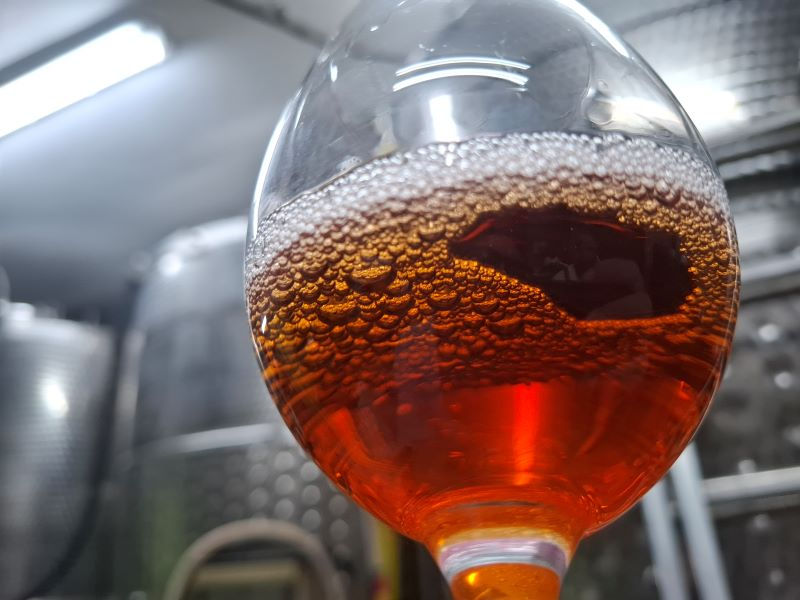
In addition to Belica, the winery also produces Malvazija. The grapes for it come from its own rented vineyard in the Terre Bianche area, near Buje, on white soil. The offer also includes red wine made from grapes that the winery purchases, since the limited Kastav area is not enough to plant all the necessary varieties. But Belica remains the center of the house. "The story of this house is definitely the story of Belica. We put our energy into it and that is our mission," says Rubeša.
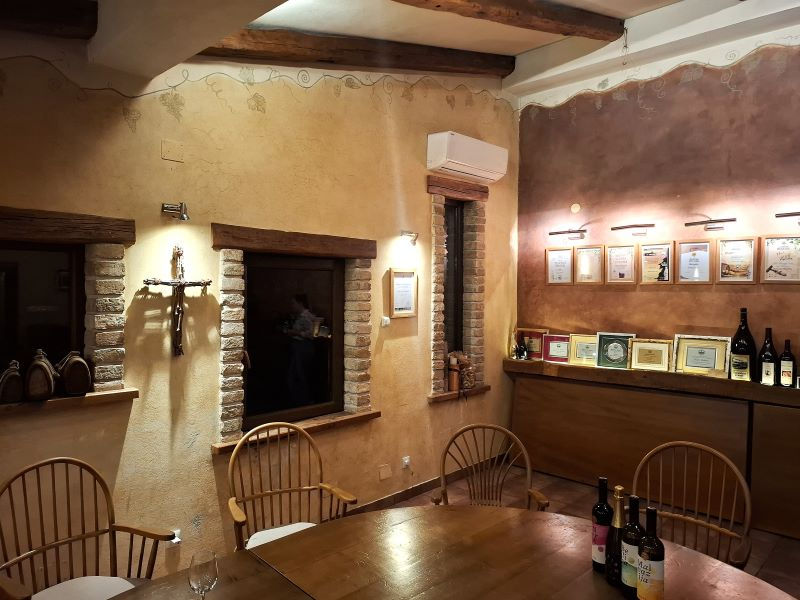
One of the most interesting products from Plovanić is the sparkling wine from Belica. It is not made from all the components of the blend, but from three varieties that have proven to be particularly suitable for sparkling wine during research: arbola, divjaka and verdić. The sparkling wine is produced using the classic method and is aged on the yeast for at least two years. Rubeša describes it as a wine that regularly reaches the rank of a top product. Verdić is of particular interest. The Faculty of Agriculture has determined that the local Kastav verdić is genetically identical to the Italian glera, the variety from which prosecco is produced. Thus, in one bottle of Kastav sparkling wine, arbola, divjaka and verdić meet – local history, renewed tradition and an internationally recognizable genetic connection. Production is currently small. Plovanić can produce a maximum of around two thousand bottles of sparkling wine per year, while still wine is even less. New plantings should increase the quantities in the future. This year, a little over a thousand new vines were planted, and when they reach full fruition, the winery could produce approximately ten thousand bottles a year in total. Rubeša makes this estimate cautiously. In viticulture, it is always difficult to speak with certainty several years in advance.
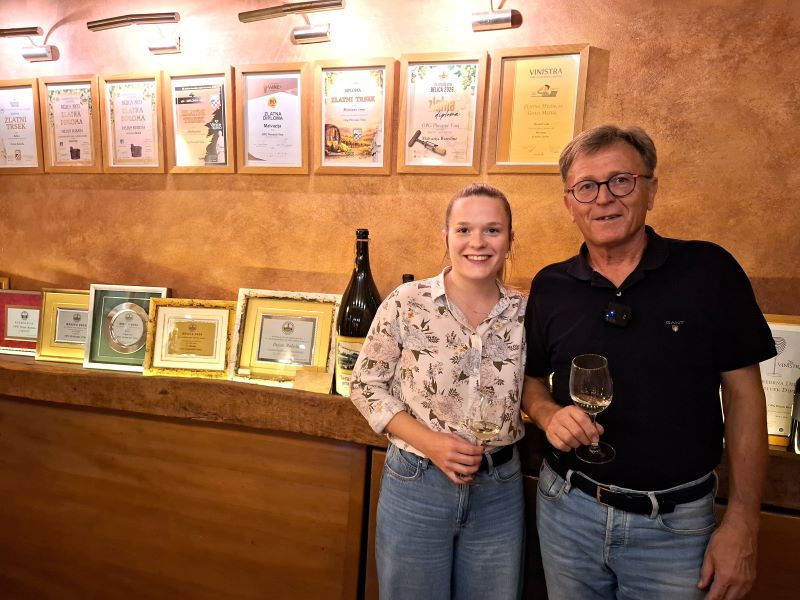
Today, a new generation is strongly involved in the story of the Plovanić winery. Rubeša's daughter Ivana took over the family farm, but she does not see her role as a sudden step into the world of winemaking, but rather as a natural continuation of a life in which the vineyard, tavern and cellar have always been part of everyday life. "People who know whose daughter I am, somehow it makes sense to them, and everything we do, we do as a family," she says. As a woman in the wine industry, she adds, she does not feel isolated at all: Kastav's winemakers work together as a team, are open to exchanging knowledge and helping each other, especially on demanding days of harvest when equipment failure or unforeseen circumstances can jeopardize the entire business. "We do not see each other as competitors, but as colleagues, as people who share the same passion," she emphasizes.
Her generation brings a more modern perspective on wine presentation to the family story. While previous generations had to prove that Belica can be a serious, high-quality and market-recognizable wine, she wants to ensure that the product is equally convincing to the outside world: through photography, social media, communication, labels and the entire brand identity. “Today, the times are dictated by images, photography and social media,” she says, explaining how the winery has turned more seriously to marketing and branding in recent years. She is not talking about a radical shift, but rather a continuation of a direction that has already proven to be good: preserving the family and Kastav wine authenticity, and presenting Belica in the language of the times in which a new audience lives.
Plovanić sells most of its production directly, through a tasting room, local restaurants and catering establishments. An important step forward occurred a few years ago when they were recognized by the Liburnia Riviera Hotels, which today take the bulk of their production. Rubeša recalls, somewhat ironically, that perhaps they needed to be recognized by a German guest in order for the domestic market to understand what was happening in Kastav. Belica and Kastav, he believes, should be synonymous. White wine from this area is also mentioned in the Statute of the City of Kastav, through provisions on taxes and obligations. Red wines have never had the same importance here, because they could not compete with Dalmatian varieties. That is why Kastav winegrowers planted what they could sell – primarily white grapes. In the old vineyards, red varieties only occupied five to ten percent of the plantations, mainly for home use. Today, Belica is produced by about fifteen winemakers, mostly gathered around the Belica association. Rubeša is among the largest producers, but he emphasizes that the value of the project is not only in quantity. Today, the association brings together about a hundred members, winegrowers, winemakers and wine lovers. Its coat of arms reads “friend, lipstick, grapes and wine”, which well describes the spirit of the entire community.
When talking about winemaking, Dejan Rubeša does not speak as an entrepreneur who has found a market niche. He speaks as a man who has found the continuation of his own family story in the vineyard. That's why, when asked if winemaking was a business, he answers without much thought: "If this were a business, I wouldn't do it." That sentence perhaps best explains why Plovanic's story is interesting. There are no large quantities, wide plantations, or simple calculations in it. There is a lot of manual labor, small plots, a changing climate, long waits, and a constant struggle with limited space. But there is also something more important: the feeling that what could have disappeared is being restored. From a few dozen old vines to hundreds of new ones. From wine that was the subject of ridicule to top ratings. From a small local association to an increasingly recognizable wine region. From a family tavern to a tasting room where local people, guests, restaurateurs, and wine lovers meet today.
Photos: Taste of Adriatic i Plovanić Vina
OPG Plovanić vina
Šporova jama 7, 51215 Kastav


Comments