


Ston - Not Only a Town of Oysters and Walls

At the very entrance to the Pelješac peninsula, between Dubrovnik and Korčula, lies Ston - a town that in recent years has increasingly been on the list of places worth visiting during a stay in southern Croatia. And while many still associate it exclusively with oysters or impressive walls, spending a day in its stone streets makes it clear that this is a destination that offers much more.
Ston is a place where history, gastronomy and tradition intertwine at every turn. Its walls have protected one of the greatest treasures of the Dubrovnik Republic for centuries - white gold, salt - which made this town of exceptional strategic importance. Today, this defensive system, the oldest active saltworks in Europe, and the superb gastronomic offer are the main reasons why Ston attracts an increasing number of domestic and foreign visitors. However, what sets it apart from numerous Adriatic destinations is not only its rich history. Ston has managed to preserve the authenticity and that wonderful 'vibe' of a Mediterranean city. Here, in the old stone streets, you will be greeted by friendly hosts; you will smell risotto and buzare, and the amenities that make this town unique will encourage you to explore Ston during the day.
It is difficult to imagine a visit to Ston without a tour of its monumental walls, which are rightfully considered among the most valuable monuments of fortification architecture in Europe. Built after the Republic of Dubrovnik took over Ston and Pelješac in 1333, the walls protected the city, its population and the most valuable resource of that time - salt - for centuries. Today, they stretch for about 5.5 kilometers and connect Ston and Mali Ston, which is why many call them Europe's answer to the Great Wall of China. The tour can be started from Ston or Mali Ston.
There are two entry points for visitors, and the walk leads over stone steps, medieval towers and fortifications to impressive viewpoints with views of the Ston Saltworks, Mali Ston Bay and the Pelješac hills. A tour of the open part of the walls takes between an hour and a half and two hours, depending on the pace and number of stops. The uniqueness of the Ston Walls is not only their size, but also their complex defense system, which once included ten round and 31 square towers, six bastions and several fortresses. Today, they represent one of the biggest tourist attractions in southern Croatia and an essential stop for anyone who wants to learn about the rich history of Ston from a unique perspective - walking along the walls that have dominated this landscape for almost seven centuries.
When you are in Ston, be sure to take the time to visit the Saltworks. Salt was once as valuable as gold, and the Republic of Dubrovnik generated most of its income thanks to it, which is why the famous Ston walls were built around the saltworks. The uniqueness of the saltworks is not only its rich past, but also the fact that salt is still produced in almost the same way as it was thousands of years ago. The sun, sea and wind still play the main roles, while the final part of the process is done manually, just like in the past. The ticket for visiting the saltworks includes watching a film about how sea salt is made, after which you can take a walk among the evaporation pools and hear first-hand interesting stories about the "white gold" that made Ston one of the most important places in the Republic of Dubrovnik. After the tour, it is difficult to look at ordinary table salt with the same eyes.
Veliki Kaštio is the most impressive part of the Ston walls' defensive system and one of the city's most important symbols. Built in the mid-14th century, after the Republic of Dubrovnik took over Ston and Pelješac, it played a key role in protecting the city and the Ston Saltworks, then the Republic's most valuable source of income. Located at the southern entrance to the city, it monitored approaches to Ston and served as the central defensive point of the entire fortification system. Over the centuries, it served as a military fortress, warehouse and place of accommodation for the military crew. Today, it is an indispensable part of a tour of the Ston Walls, and its walls offer an impressive view of the historic core of Ston, the Saltworks and the Mali Ston Bay, which is why it is a favorite place for many visitors. Although it has been renovated and expanded several times over the centuries, it has preserved its core. It gained special value through renovation, after which it was transformed into a modern space with a beautiful atrium where numerous cultural events are held, as well as private parties with the most beautiful backdrop.
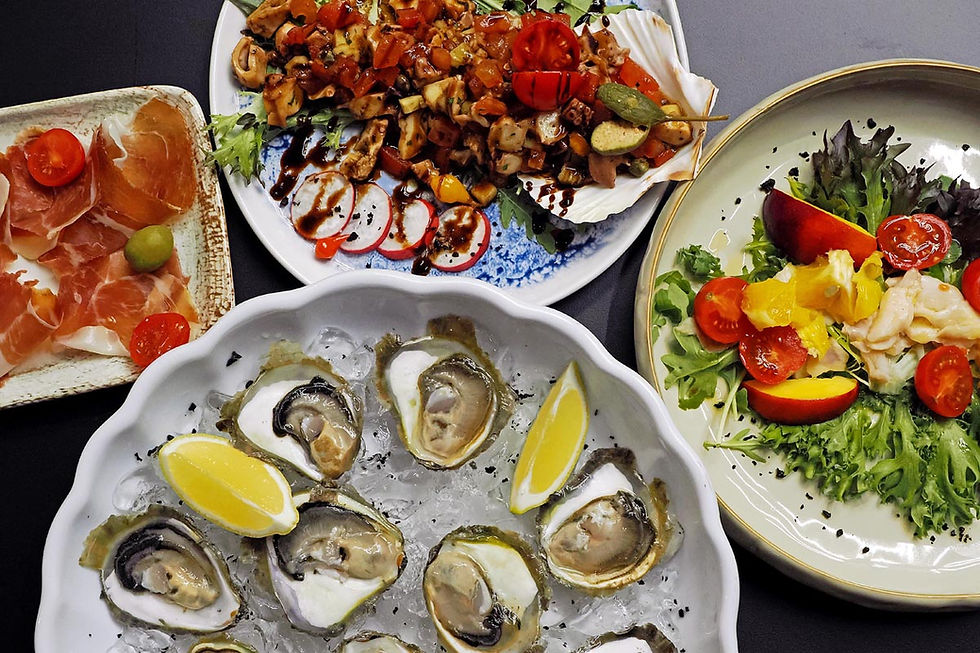
One of the most popular activities during a stay in Ston is visiting oyster farms (there are almost 40 in Mali Ston Bay). Six of them receive visitors daily, and it all starts with a short boat ride from Mali Ston, during which hosts like Boris Franušić (Gusta Me oyster farm) introduce guests to the centuries-old tradition of shellfish farming in the Mali Ston Bay. During a visit to these special farms, you will learn what the pergolas where oysters and mussels grow look like, but also how long it takes for the shellfish to reach the ideal size for consumption. You will also learn the entire farming process, from releasing the fry into the sea to extracting the oysters, which, thanks to the special combination of fresh and seawater, acquire their distinctive taste. The central part of the tour is a tasting on a floating platform in the middle of the bay. The oysters are opened just before serving and are most often served fresh, with a few drops of lemon and a glass of Pelješac wine. They are often accompanied by mussels prepared in the traditional way and other local products. This type of excursion provides an opportunity to get to know one of the most important economic sectors of the Ston region, but also to experience the authentic flavors of the Mali Ston Bay in the place where they are created. This is precisely why oyster tasting has been an indispensable part of the tourist offer of Ston and Pelješac for years.
If you set out to explore Ston, you will pass through the central town square several times, following the signposts to what you want to visit. The more you walk, the more your appetite will grow, and Ston will also smell good. While you're wondering whether it smells like fish or meat, pasta or risotto, you'll see the terrace of Konoba Baća on the central town square. A modern gastro address that locals will tell you they eat at themselves, explaining that it is one of the oldest taverns in Ston. It opened in 1878 and has been welcomed by locals and foreigners alike, which is why its doors remain open year-round. In recent years, it has experienced a gastronomic breakthrough under the leadership of owner Tomislav Šara, who, together with his team, has upheld the brand's philosophy and refreshed Dalmatian cuisine with modern dishes to satisfy diverse tastes. Chef Stanka Tolj played a major role in creating 'Šara tanjura', giving traditional recipes a new look while also combining seemingly incompatible savory and sweet flavors in a special way. The biggest hits on the menu are the green shrimp risotto, made with shrimp and home-grown wild mushrooms from their own garden, beetroot risotto with cottage cheese, homemade gnocchi with Genovese pesto, and fresh fish and shellfish from the waters of Ston. When you're here, you'll also smell the burgers, whose soft buns hide a specific steak and fresh vegetables with a special flavor. As a side dish, there are homemade fries with a unique flavor. What sweet to eat when you're in this tavern? The choice is small, because when you're in this tavern, you have to try the traditional cake of this region - Stonska makarula. It is made from thin dough filled with an aromatic mixture of macaroni, ground almonds and walnuts, cinnamon, lemon zest, and liqueur. It used to be served on festive occasions, and today it is an unavoidable gastronomic symbol of Ston, as well as a souvenir you will want to take home after visiting Ston.

Fans of active holidays can explore the numerous hiking and cycling trails that lead through vineyards, olive groves and viewpoints of Pelješac, try kayaking or diving in the crystal-clear sea of Mali Ston Bay, while those looking for relaxation will easily find hidden beaches far from the summer crowds. And if you want to feel the hustle and bustle of this wonderful town, you can do so during the summer. The tourist board, led by the young director Antonio Barović, has prepared a wonderful summer program. During the summer, open-air theater performances, concerts, exhibitions, children's workshops and animation programs are held, as well as traditional folk festivals that bring together locals and visitors with Dalmatian music and local cuisine.
foto: Nikola Zoko i promo


Comments