


Days of Croatian Prosciutto

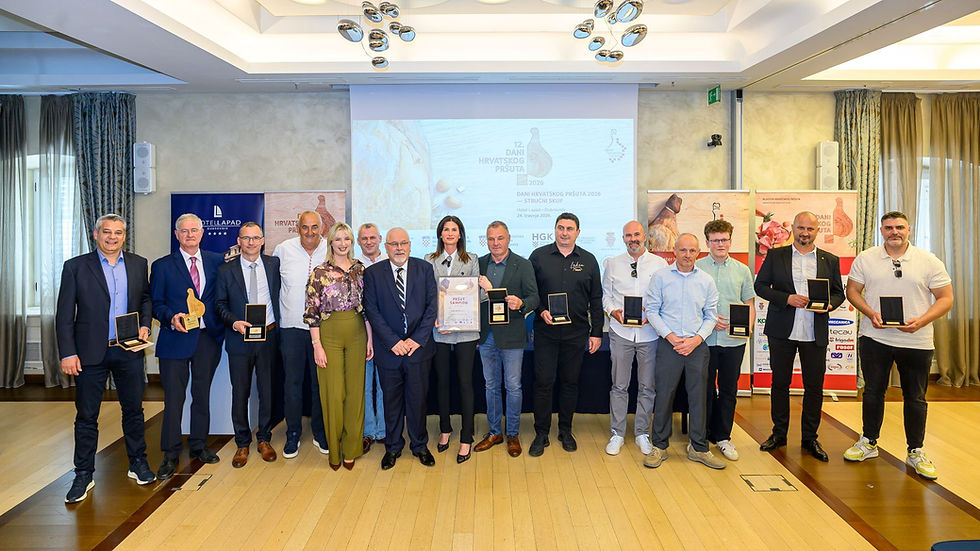
At the end of April, Dubrovnik will host the 12th edition of the Croatian Prosciutto Days. This is not merely a tasting event. It is a gathering of expertise, craftsmanship, and serious business. On 24 April, specialists at Hotel Lapad will discuss what lies behind every slice: whether production can continue to grow, how to withstand the pressure of imports, and where Croatian prosciutto belongs on the European table. In a city more accustomed to counting cruise ships and tourists, this time the focus was on counting slices and medals. And those medals, without much debate, were largely claimed by producers from the Istrian peninsula. The Istrian prosciutto Pisinium won the title of champion at the 12th Croatian Prosciutto Days, held in Dubrovnik on 24 and 25 April. Second place went to Dujmović Istrian prosciutto, while third place was shared by the Dalmatian prosciuttos Barić and Smjeli, which received the same number of points.
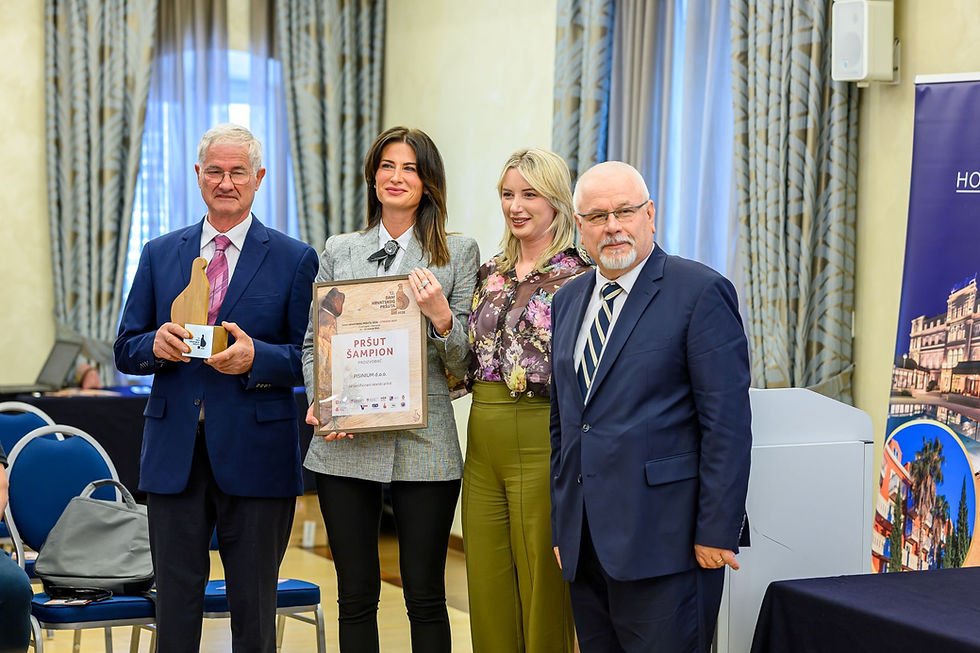
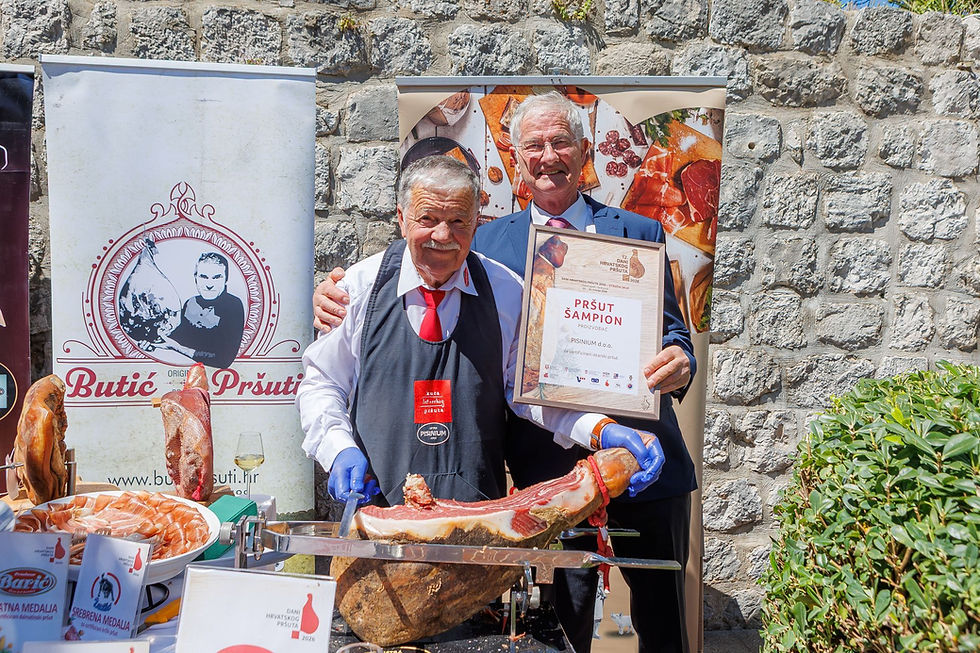
Interestingly, Pisinium had already been named the best in Dubrovnik back in 2018, when the Croatian Prosciutto Days were first held beneath Mount Srđ. “Winning the champion’s title is both confirmation and recognition of our work. This award further motivates us to preserve our tradition and authenticity,” said Melani Hreljak, who owns Pisinium together with her sister Hani and their father Josip. Ahead of the event, 14 prosciuttos were submitted for judging, and the Istrians excelled despite difficult times for the industry, particularly in Istria, which after the outbreak of African swine fever in Slavonian counties faced a shortage of the raw materials needed to satisfy the strict EU criteria for protected designation of origin.

“In a time of globalisation and mass production, what is authentic, local, and trustworthy is especially valuable. Croatia can take pride in the fact that it has four prosciuttos protected at European Union level – Istrian, Krk, Drniš, and Dalmatian. These are not merely products; they are stories of landscape, knowledge, and generations who preserved tradition. Protected designations of origin and geographical indications at EU level are not administrative formalities – they are guarantees of quality, identity, and trust. They protect both the producer and the consumer. That is why it is important to continue investing in knowledge, standards, and cooperation throughout the entire chain, from farming to the finished product,” said Ante Madir, Executive Director of the Croatian Prosciutto Cluster and envoy of President Milanović.
Darko Markotić, President of the Cluster, also pointed out that the Croatian market is heavily influenced by global developments. “With inflation stabilising, the market has become steadier, but trade and tariff wars have created surpluses of prosciutto on the EU market, putting strong pressure on prices on Croatian shelves as well. The answer to these pressures could be even greater investment in prosciutto production in order to increase capacity and ensure consistent quality. We must also strengthen the branding of our prosciuttos to improve recognition on the market. If all the projects currently being prepared are realised, production capacity could exceed 800,000 pieces annually. Considering that current production stands at around 550,000 pieces, this would represent a major breakthrough. There is still room for growth, given that annual consumption in Croatia is around one million pieces,” Markotić said.
“The strong growth of tourism, with double-digit increases in arrivals and overnight stays in the pre-season, directly boosts consumption of products such as prosciutto, while wine and gastronomy are becoming key motives for tourists visiting outside the peak season. Croatia has protected four types of prosciutto and more than 50 agricultural and food products, placing it alongside France, Italy, and Spain. For further development, it is essential to increase domestic pig farming production in order to reduce dependence on imports and secure quality raw materials. We must also ensure a stronger presence of domestic products within tourism, particularly in premium offers, in order to provide visitors with authenticity and better value for money,” said Dragan Kovačević, Vice-President of the Croatian Chamber of Economy for Agriculture and Tourism.
Zdravko Tušek, State Secretary at the Ministry of Agriculture, Forestry and Fisheries and envoy of the Prime Minister, stressed that prosciutto is an important part of Croatian culture and identity, the “king of our tables” that accompanies all life’s milestones. He emphasised the importance of preserving and promoting prosciutto through events such as this and through the work of producers, as well as the continuous support provided by the Government through product protection, financing, and EU funds. The aim is to increase production and the number of certified prosciuttos in order to ensure quality, origin, and long-term sustainability.
Žaklina Marević, Head of the Administrative Department for the County Prefect and County Assembly, thanked the Croatian Prosciutto Cluster for bringing the Croatian Prosciutto Days back to Dubrovnik after eight years. She highlighted the importance of the event for preserving the authenticity of prosciutto and strengthening cooperation among producers, noting that agriculture and tourism are key and interconnected sectors.
Martina Skopljaković, Head of the City of Dubrovnik’s Administrative Department for EU Funds and Economy, stressed that Dubrovnik has always been a place of encounter, cooperation, and openness. The Dubrovnik edition of the Croatian Prosciutto Days is organised with the financial support of the Ministry of Tourism and Sport, the Croatian Chamber of Economy, Dubrovnik-Neretva County, the Dubrovnik-Neretva County Tourist Board, and the Dubrovnik Tourist Board.

“The Croatian Prosciutto Days were conceived as a central meeting point for producers, experts, and everyone involved in the chain from field to table. The goal is clear – to raise quality standards and secure the place Croatian prosciutto deserves,” said Executive Director Ante Madir.
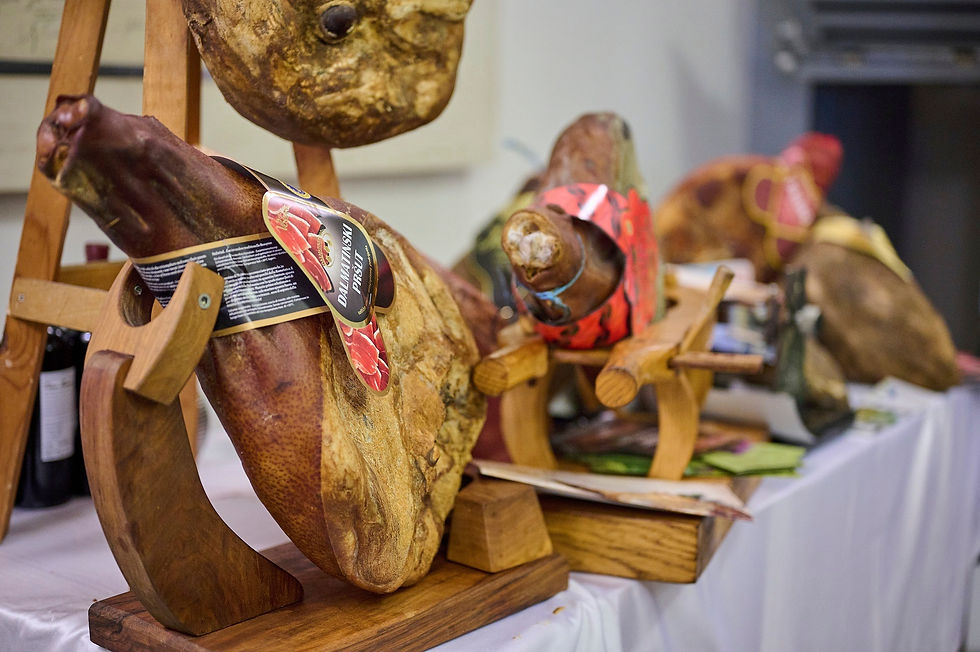
There are four names, but one story – Dalmatian, Drniš, Istrian, and Krk prosciutto. Different in character, yet united by the same philosophy, and all four protected at European Union level.
“Quality continues to improve and follow European standards, but producers still feel the pressure of imports. That is why stronger connections with tourism and hospitality are crucial,” Madir added.
The story of prosciutto in Dubrovnik began on Saturday, 25 April. From 9 a.m., Dubrovnik’s Gruž market became a meeting place for producers and those who appreciate a fine bite.

The producers remained behind their stands for as long as there was prosciutto available – in some cases until around 2 p.m. The Dubrovnik edition of the Croatian Prosciutto Days was organised with financial support from the Ministry of Tourism and Sport, the Croatian Chamber of Economy, Dubrovnik-Neretva County, the Dubrovnik-Neretva County Tourist Board, and the Dubrovnik Tourist Board.
Photographs: Croatian Prosciutto Archive


Comments