


Konoba Al Ponte – Elegance on the Plate

There are restaurants born out of a business plan—and then there are those born from a stubborn love of cooking. The story of Konoba Al Ponte belongs to the latter. When Maja Mikleus Bradičić and Marin Bradičić opened the doors of their konoba in 2018, they had little experience in management, paperwork, or hospitality logistics. What they did have was something else: a clear idea of what they did not want to be. They did not want to be just another fish restaurant like all the others around them; they did not want to serve ćevapi; they did not want squid dishes repeated on every menu. And that decision cost them at the beginning—guests asked for pizza, asked for bolognese, and even got up and left their tables. But they chose to persist. Looking back now, it is clear that this was the defining moment of their gastronomic identity.

The space they work in has its own, almost cinematic history. It was once a petrol station and a lorry service centre, still evident today in the high ceilings and large doors. For the past fifty years, it has been used for hospitality, and they are the third to take it over—“third time lucky,” as they say. Old photographs still hang on the walls, recalling the site’s industrial past. This blend of rawness and heritage gives the restaurant its distinctive atmosphere: not a polished, artificially styled interior, but a space that has grown organically alongside the people who work within it.
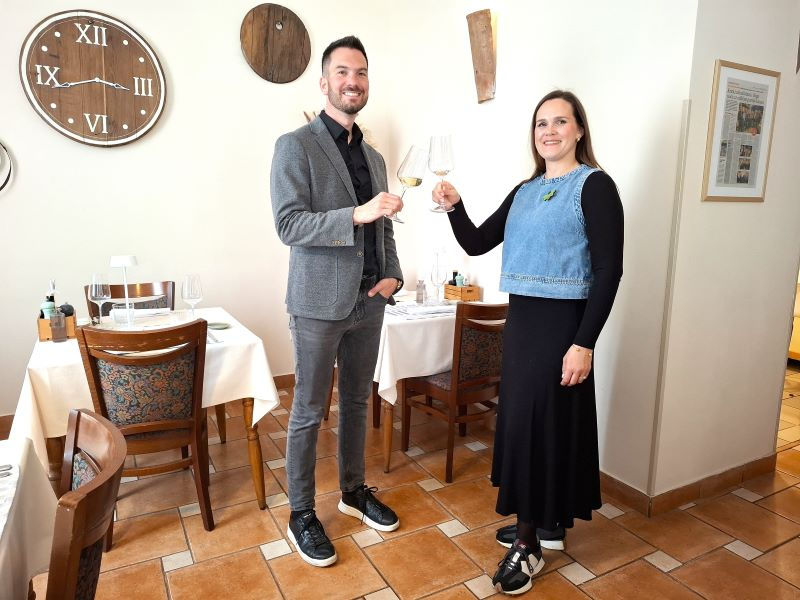
And those people come from a family in which hospitality is almost a destiny. A father who was a taxi driver, family-owned apartments, a sister and brother-in-law with their own ventures in gastronomy—the entire network of life revolves around food, guests, and the sea. This logistical and emotional connection means understanding the rhythm of the tourist season, but also a readiness to work year-round, without closing when the weather cools. In this sense, the restaurant is part of a broader Mediterranean ecosystem of life and work.

The cuisine they develop is based on a simple yet demanding idea: seasonality. Gnocchi, pljukanci, soon ravioli—everything is handmade whenever possible. Spring brings asparagus, then peas, later porcini mushrooms, and eventually pumpkin. The menu does not change because of trends, but because of nature. This philosophy requires discipline, but also flexibility—because sometimes there are no guests, sometimes no ingredients, and sometimes no time. Yet one thing remains constant: their suppliers. Even as prices rise, quality does not change.
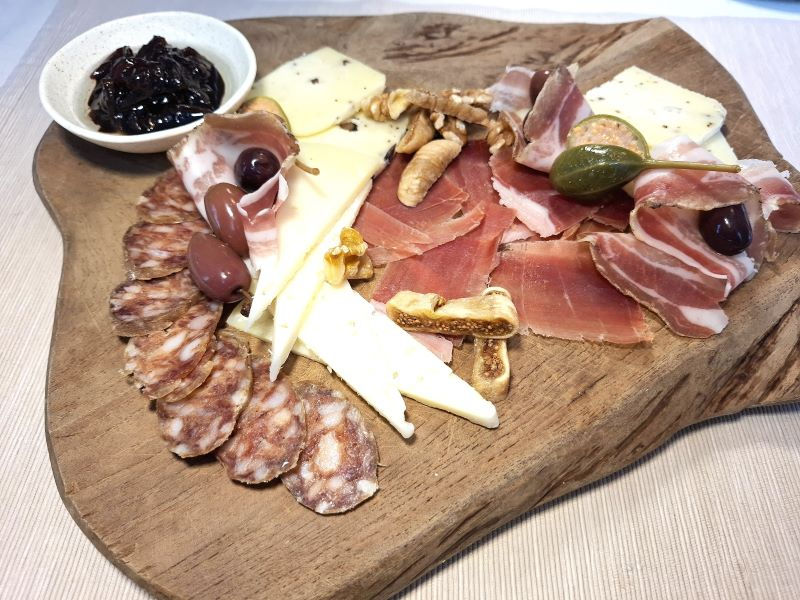
The first dish to arrive set the tone for the entire experience—a selection of cold starters that does not aim to impress through quantity, but through character. Thinly sliced Dalmatian prosciutto, cut by hand, had a delicate, almost sweet aroma of long ageing, while Istrian sausages offered a more rustic, spiced note. Alongside them were locally produced cheeses, among which the truffle cheese stood out—subtly aromatic and perfectly creamy. Everything was rounded off with dried figs and homemade onion marmalade—a combination that may sound unexpected at first, yet works surprisingly harmoniously.

Among the dishes that frequently return to guests’ tables is the beef carpaccio. At first glance, a classic—but its execution sets it apart: finely sliced meat, creamy horseradish adding gentle heat, rocket for freshness, and Parmesan to bring everything together. A balsamic reduction provides the finishing note, without excess. It is a dish that does not impress through concept, but through precision. Special attention is given to the origin of ingredients. If Croatian potatoes are available, Croatian potatoes are used. Chinese garlic is avoided, while local products such as garlic from Brseč are preferred. This is both a support for local production and a preservation of authentic flavours. In a world where global supply chains blur differences, such choices become a form of quiet resistance.

The menu is deliberately small. At a time when many restaurants try to cater to the “masses”, here the approach is the opposite. Fewer dishes mean more attention to each plate. Gnocchi with goulash, pljukanci with beef steak and sun-dried tomatoes, ravioli with aromatic pesto—these are dishes that assert themselves through consistency. Even when classics such as carpaccio or squid are included, they are interpreted through the restaurant’s own approach, without compromising to banality.

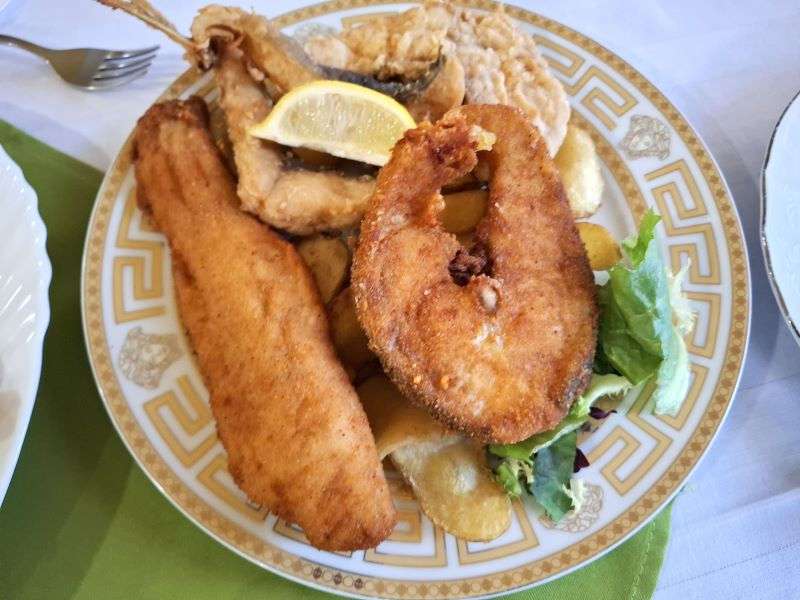
Fish is present, but not dominant. A sea bass fillet arrives without the expected Swiss chard and potatoes, replaced instead with seasonal vegetables such as broccoli or kale. These are small but significant interventions, showing a desire to move beyond tourist-standard expectations. The cuisine remains rooted in tradition, yet not bound by it—it is a dialogue between what was and what could be.

Warm starters introduced the story of pasta, which forms the foundation of the restaurant’s identity. Gnocchi with nettles, served with asparagus and prawn sauce, was one of those dishes that immediately catches the eye and then fully wins you over with flavour. The gnocchi themselves were delicate and light, with a gentle earthy note from the nettles. The asparagus sauce was fresh and spring-like, with a creamy texture that tied all elements together, while the prawns added a subtle sweetness of the sea and depth of flavour. The dish was exceptionally well balanced—no ingredient dominated, yet each was clearly present.

Homemade tagliatelle with veal ragù embodied classic cuisine executed with restraint and sensitivity. The pasta was perfectly cooked—elastic and firm enough to hold the rich sauce—while the ragù was deep, aromatic, and slowly reduced to full expression. The meat was tender, almost falling apart under the fork, layered with flavours developed through long cooking. There were no unnecessary additions—just a delicate touch of seasoning and perhaps a hint of wine rounding off the dish. It felt warm, familiar, and honest, yet refined enough to leave the impression of serious culinary craftsmanship.

Desserts may be the most poetic part of the story. Sweet gnocchi filled with a cream of dried plums cooked in red wine take you back to childhood, yet with a touch of sophistication. Istrian doughnuts, poppy seed cakes, occasionally flambéed citrus—everything plays between rustic and elegant. Pancakes are avoided, except when children are involved—a small exception that says a great deal: rules exist here, but they are not rigid.

When dessert arrived, everything returned to a kind of gentle nostalgia. Sweet gnocchi filled with dried plum cream in red wine were a true revelation. A sauce of toasted breadcrumbs, butter, and sugar added textural contrast, while the filling brought depth and a subtle wine aroma. It is not a dessert that tries to be light, but one that is honest—and that is precisely why it works. To finish, a panna cotta with hazelnut praline closed the evening elegantly and calmly. Creamy but not heavy, with an addition that gives it character without overpowering it. The entire meal thus formed an experience that is not spectacular in the conventional sense, but deeply satisfying—because each plate carries a story, effort, and clarity of vision.

The wine list follows the same philosophy as the kitchen: a focus on local, with a careful expansion towards the wider world. Istria and Kvarner form the foundation, but there are also wines from Slavonia, Zagorje, as well as selected Italian, Slovenian, and French labels. Over forty labels on the list, with another ten or so off-menu—enough for exploration without confusion. Food and wine pairing is not a formal procedure, but part of a conversation with guests—and in that, we found immense enjoyment.

And perhaps it is precisely in that communication that the key lies. A restaurant is not merely a place to eat, but a place where relationships are built. Guests often arrive and say, “We leave it to you.” That is the greatest trust a chef can receive. In that moment, the boundary between kitchen and table disappears, between preparation and experience. What remains is the most important thing of all—honest, living gastronomy that does not strive to be perfect, but to be itself.

Konoba Al Ponte
Ljube Mrakovčića 2, 51417 Mošćenička Draga
+385 91 766 5996


Comments