


The Egyptian Breakfast Table: A Morning Tradition of Flavour and Hospitality

Egyptian breakfast is less a meal to be hurried through than a small daily celebration of abundance, simplicity, and company. As the morning begins, the table fills with warm bread, bowls of slow-cooked beans, crisp fritters, salty cheese, olives, vegetables, and glasses of tea. In homes, cafés, and the little breakfast counters that come alive at dawn. Food is placed within easy reach and everyone helps themselves, tearing bread, dipping, scooping, and passing dishes across the table. The result is wonderfully informal: breakfast feels less like a course and more like a gathering.

At its heart are two unmistakably Egyptian favourites: ful medames and ta'ameya. Their histories are older and more layered than the modern breakfast table might suggest. Fava beans appear to have become established in Egypt around the Greek and Roman periods and were certainly an important food by the medieval era. Traditional ful was once cooked overnight in large vessels buried among hot ashes, a technique associated with the name medames, while ta'ameya became firmly established in Egyptian cuisine by the early twentieth century. Together, they eventually became the defining morning pairing of Egyptian street food and home cooking.

The pleasure of an Egyptian breakfast lies in the way it is eaten. Rather than arriving as a carefully composed individual plate, the food usually comes as a collection of bowls and small dishes, inviting diners to build each bite themselves. A piece of baladi bread becomes a scoop for ful; a hot ta'ameya is broken open and dipped into tahini; a salty piece of cheese is followed by a slice of tomato or cucumber. There is no need for elaborate cutlery or ceremony. The hands do much of the work, and conversation naturally stretches the meal. In this sense, breakfast expresses something central to Egyptian hospitality: there should always be enough to share.

For the traveller, one of the most enjoyable ways to experience this tradition is to follow the aroma rather than a menu. Early in the day, neighbourhood ful shops and street counters begin serving steaming beans and freshly fried ta'ameya, while bakeries turn out rounds of warm aish baladi. The scene is wonderfully democratic: workers, students, families, and visitors can gather around the same humble foods. A breakfast eaten at a small local café, with bread still warm and tea arriving in a glass, offers a very different experience from a hotel buffet, even when the ingredients are almost identical.
And there is something deeply satisfying about the rhythm of the meal. Egyptian breakfast is built from inexpensive, familiar ingredients, yet the combination creates remarkable variety: earthy beans against sharp lemon, crunchy fritters beside creamy tahini, briny olives alongside fresh vegetables, and salty cheese balanced by hot bread. It is nourishing without feeling austere and generous without being formal.
Ful Medames
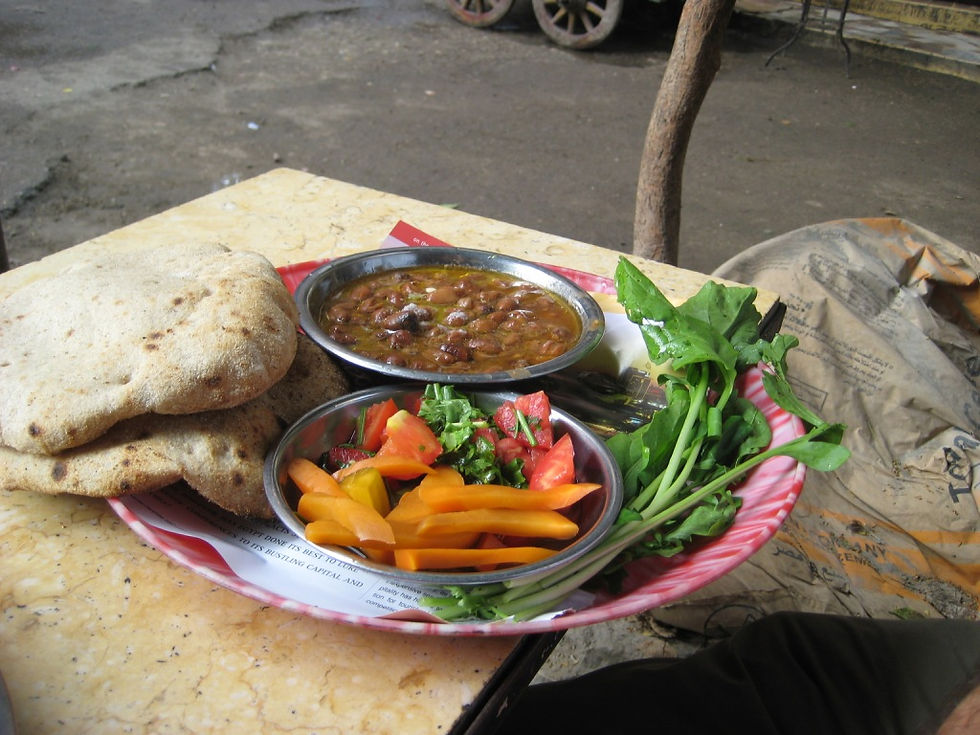
The undisputed anchor of the Egyptian breakfast table, ful medames is a dish of fava beans cooked slowly until tender and creamy, then seasoned according to taste with cumin, lemon, garlic, oil, and often chilli or fresh vegetables. The texture can range from brothy and rustic to thick enough to fill a sandwich. Traditionally, the beans could be cooked overnight in vessels nestled into hot ashes, giving the dish its distinctive name and its unhurried character. Today, a bowl of ful arrives steaming from a street vendor or family kitchen, ready to be scooped up with bread.
Ta'ameya

Egypt's answer to falafel has a personality all its own. Ta'ameya is traditionally made from fava beans rather than the chickpeas more commonly associated with falafel elsewhere in the region. The beans are ground with fresh herbs and spices, producing a mixture that is vividly green and aromatic inside. Shaped into patties and fried until crisp, ta'ameya is at its best straight from the oil, with a crunchy exterior giving way to a soft, herb-filled centre. A little tahini, tomato, pickles, and warm baladi bread turn it into one of the great pleasures of an Egyptian morning.
Baladi Bread

Aish baladi is not merely an accompaniment—it is the utensil, wrapper, scoop, and essential companion of the Egyptian breakfast. This round, whole-wheat flatbread puffs dramatically in the oven, creating a soft interior and a slightly toasted exterior. Its name is particularly evocative: aish means “life” in Egyptian Arabic, reflecting bread's fundamental place in everyday Egyptian food culture. Tear off a piece while it is still warm, use it to scoop up ful or tahini, and the breakfast immediately becomes a hands-on experience.
Tahini

Creamy, nutty, and pleasantly bittersweet, tahini brings richness to an otherwise earthy breakfast. Made from ground sesame seeds, it can be served simply as a dip or loosened with lemon and water into a silky sauce. Spoon it over ful, dip ta'ameya into it, or spread it onto bread before adding vegetables and cheese. Its luxurious texture makes a wonderful contrast to the crispness of fried ta'ameya and the rustic chew of baladi bread.
Beid w Gebna

Eggs and cheese are a particularly comforting addition to the Egyptian morning table. Beid w gebna—eggs with cheese—can appear in simple home-style preparations, with eggs cooked until tender and combined with pieces of salty white cheese. The appeal is wonderfully straightforward: warm, soft egg, creamy or crumbly cheese, and bread made for scooping. It is the kind of dish that feels equally appropriate at a family breakfast or alongside a leisurely spread shared with friends.
Gebna Beyda

Gebna beyda, or white cheese, brings a bright salty note to the breakfast table. Egyptian white cheeses vary in texture and intensity, but their savoury character is particularly welcome beside mild ful and rich tahini. A small piece tucked into baladi bread with tomato or cucumber makes an effortless bite, while its saltiness provides exactly the contrast that keeps the table's many earthy flavours lively. White cheese is a reminder that Egyptian breakfast is built as much around contrasts as around individual dishes.
Olives

Olives add a briny, almost Mediterranean punctuation mark to the meal. Green or black, mild or intensely salty, they are typically served in a small bowl for picking at between bites of ful, cheese, and bread. Their sharpness cuts through the richness of tahini and eggs, while their firm texture adds another dimension to the otherwise soft breakfast foods. Like many Egyptian breakfast accompaniments, olives are not meant to dominate; their role is to make everything around them taste more interesting.
Fresh Vegetables

Fresh vegetables bring colour, crunch, and freshness to a breakfast otherwise dominated by warm, soft, and fried foods. Tomatoes and cucumbers are particularly familiar companions, often joined by spring onions, peppers, or herbs. A juicy tomato beside hot ta'ameya can be transformative, while cucumber offers a cool counterpoint to cumin-scented ful. They also make the meal feel abundant: simple ingredients, sliced and placed in the middle of the table, become part of a generous communal spread.
Karkadeh

Karkadeh, the deep ruby-red infusion made from hibiscus, is one of Egypt's most refreshing drinks and can appear as part of a broader Egyptian food experience. Its flavour is naturally tart and fruity, with a colour as striking as its taste. Served chilled, it is particularly appealing in Egypt's heat; served warm, it becomes a soothing herbal drink. Its bright acidity makes it a refreshing counterpoint to the savoury richness of a traditional breakfast.
Chai

No Egyptian breakfast feels quite complete without a glass of tea. Usually served hot and generously sweetened, chai accompanies conversation as naturally as it accompanies food. It is less a final course than a constant presence at the table—a drink to sip between bites, linger over after eating, and order almost automatically in a local café. After the ful has been scooped up, the ta'ameya finished, and the last piece of cheese disappeared into bread, a glass of sweet tea gives the meal its unhurried Egyptian finale.
Photos: Pixabay and Wikipedia Commons


Comments