


Wine Treasures of South Styria

There are few European wine regions where you can taste top-quality Sauvignon Blanc, dine in a Michelin-starred restaurant, swim in a natural lake and watch the sunset over the vineyards in the same day. This is precisely why Southern Styria has become one of the most desirable destinations for Croatians in recent years. Located only about 150 kilometers from Zagreb, this Austrian wine region can be reached in just over two hours by car, and it is up to you whether you choose the motorway through Slovenia or take the local roads from Zagreb through Slovenia, without having to buy an Austrian vignette. As soon as you cross the border, the landscape turns into a postcard!

Southern Styria is known for its mild climate, shaped by the Alps and warm Pannonian influences. While the lowlands often record high temperatures in summer, cooler Alpine winds here bring more pleasant evenings and create ideal conditions for growing grapes. Thanks to this unique microclimate, some of the best white wines in Europe are produced, primarily Sauvignon Blanc.

The region is crisscrossed by three wine roads that lead through more than 350 wineries, family-run cellars and as many as 180 traditional Buschenschank taverns serving homemade cold cuts, cheeses and wines from their own production. In this region, special attention is also paid to gastronomy, which has been awarded the highest marks. In Southern Styria, there are as many as 6 Michelin-starred restaurants that offer a combination of traditional and modern on every plate. Add to this the hospitable hosts, well-maintained cycling and hiking trails, a centuries-old wine tradition and refreshing landscapes, and it is clear why Southern Styria is one of the most beautiful holiday destinations all year round.
A stay in Southern Styria is best started at one of the family-run wine farms that offer accommodation in the middle of the vineyards. The Kögl winery in Ratsch an der Weinstraße is an example of authentic Styrian hospitality. The owner of the winery and farm, Tamara Kögl, cultivates a biodynamic approach to grape growing according to Demeter standards, so it is easy to conclude that the philosophy of staying here is based on respecting the nature in which you are staying.
You can sleep very well here (it offers comfortable rooms and studio apartments surrounded by vineyards and pastures), and the friendly hostess unobtrusively tells you her story. After a few days, you will feel like you are part of her family. If you just want to visit this winery, take a look at the wine cellar and taste wines with the Demeter label, be sure to complete your wine experience with Tamara's "Buschenschank", a typical Styrian way of pairing wine with local cold cuts, cheeses and other delicacies. Equally charming accommodation is offered by the Schwarzl family winery in Ottenberg. What was a small agricultural farm for its own needs a few decades ago has developed into a modern wine estate with accommodation for guests. Today, Johannes and Katharina Schwarzl continue the family tradition, offering guests a peaceful stay among the vineyards, homemade delicacies and wines produced on the estate. Read more about accommodation at this destination at www.suedsteiermark.com
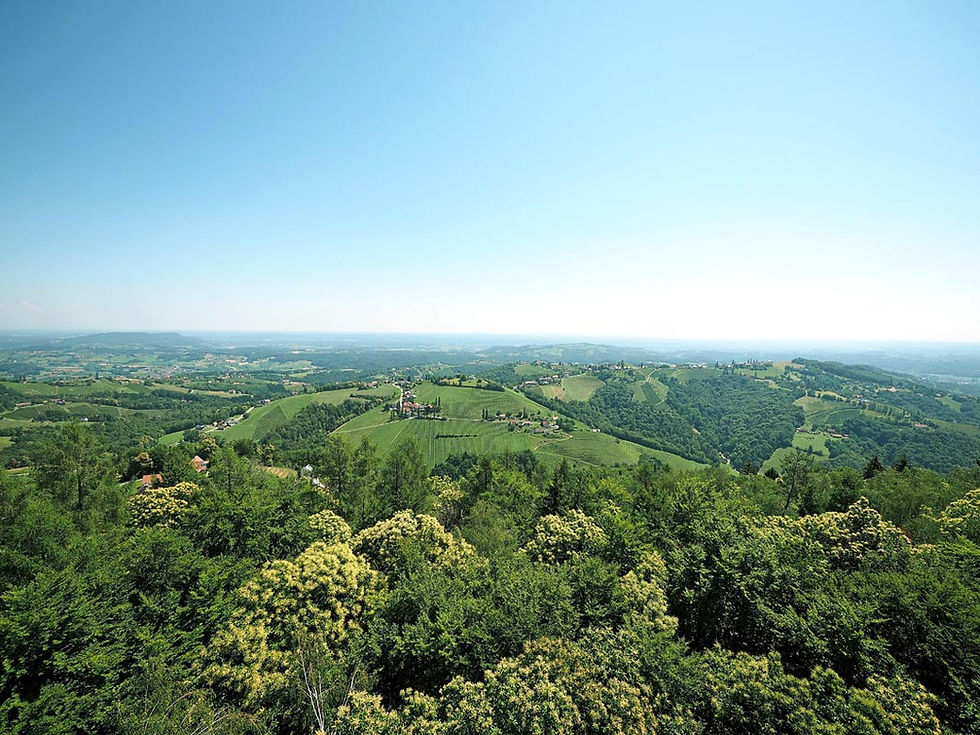
The three wine roads of Southern Styria are the best starting point for exploring one of the most beautiful wine regions in Austria. Each of them has its own character, but they all have in common a spectacular hilly landscape, top-notch gastronomy and family wineries that cherish a long tradition. The Südsteirische Weinstraße is the best known and oldest wine route in the region. It winds along the Slovenian border through vineyards, picturesque villages and panoramic viewpoints, and is particularly known for its top-quality white wines, among which the Sauvignon Blanc stands out.

Some of the most famous Styrian wine estates are located along this road. The Sausaler Weinstraße leads through the area of the steepest vineyards in Styria. The route connects Leibnitz and Kitzeck and passes by slopes, viewpoints and traditional inns. This is the home of excellent Rieslings, whose character is shaped by mineral soils and higher altitudes. Schilcher Weinstraße is located in western Styria and is dedicated to the indigenous Schilcher wine, a distinctive rosé with lively freshness and pronounced fruitiness. The route passes through quiet vineyards, small cellars and traditional Buschenschanks, offering an authentic experience of Styrian wine culture. All three wine roads are connected by the same spirit - a calm rhythm, superb local flavors and landscapes that invite you to stop at every turn.
The Johann Schneeberger winery in the Sausal area provides an unforgettable wine experience, one of the oldest wine-growing regions in Styria. The Schneeberger family has been engaged in viticulture since 1870, and today the fifth generation is united by the same philosophy - to create wines that faithfully reflect the place where they are produced. Knowledge about soil, climate, and vineyards is passed down from generation to generation, with respect for nature and sustainable production. The specialty of their wines comes precisely from the unique terroir of Sausal. The villages are located on steep slopes, at altitudes between 400 and 600 meters above sea level, where poor slate and limestone soils prevail.
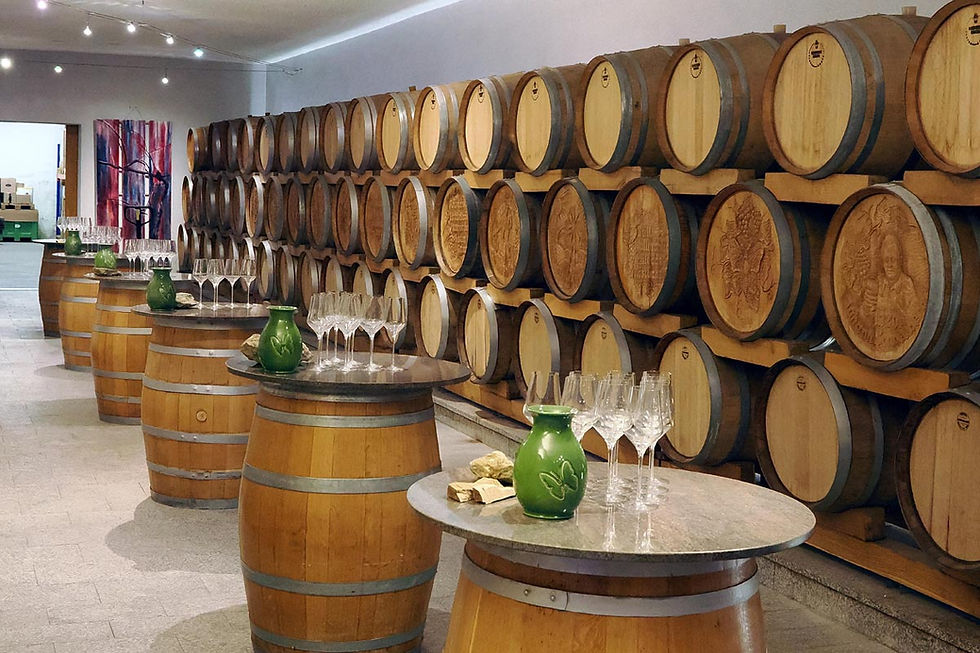
The large temperature differences between warm days and cool nights allow the grapes to ripen more slowly, giving the wines a pronounced aroma, freshness and recognizable minerality. Schneeberger is particularly appreciated for its elegant Sauvignon Blanc wines, but also excellent Rieslings, Muscats and Welschrieslings, which clearly express the character of this exceptional wine-growing area. A visit to the winery is not only about tasting wine, but also about getting to know the family tradition, Styrian hospitality and authentic cuisine in their Buschenschank, where local specialties are naturally complemented by wines produced in one of Austria's most special terroirs.
Southern Styria is today considered one of the most important European regions for white wines, and its identity can best be understood through the work of two exceptional family wineries: Weingut Wolfgang Maitz and Weingut Adam-Lieleg. Although they come from the same region and share similar climates, their philosophy and wine style show two different interpretations of the same terroir. Maitz Winery is known for its elegance, precision and pronounced minerality. The steep vineyards around Ehrenhausen, the cold Alpine winds and limestone soils produce wines that are refined, pure and long-lasting. Their Sauvignon Blanc and Riesling are often considered references for the Southern Styrian style – restrained at first, but complex and layered in the glass.
On the other hand, Adam-Lieleg with the young Florian brings a more modern approach and a strong focus on innovation in the cellar and vineyard. Their signature Sauvignon Blanc, which has also won international awards, is produced in exceptional locations such as Ried Gottscheber, where the microclimate and manual harvesting allow for a distinct aromatic depth and structure to the wine. Together, these two wineries show the breadth of the Southern Styrian wine scene – from classic elegance to contemporary interpretations of terroir. Be sure to visit both during your stay in Southern Styria.
The Lieperts restaurant, located along the picturesque South Styrian Wine Road, confirms that Southern Styria is much more than a wine destination today. Behind this successful gastronomic story stands the Lieperts family, and its face is chef Manuel Lieperts, who has transformed the family tradition into one of the most exciting cuisines in Austria. His dishes are based on Styrian recipes and flavors, but through modern techniques, precision and creativity they gain a completely new dimension.
This approach has not escaped the attention of the Michelin guide, which awarded the restaurant a star, while three Gault&Millau caps further confirm its quality. The elegant boutique accommodation surrounded by vineyards also makes for a special experience, so guests come here not just for dinner, but for a complete experience in which top-notch gastronomy, wine and hospitality merge into an unforgettable stay.
Although wine dominates the region's identity, Southern Styria is also ideal for lovers of active holidays. One of the most attractive hiking routes leads to the Demmerkogel, one of the region’s most famous viewpoints. The walk takes about an hour and a half and passes through vineyards, forests and open hills, and at the top of the path there is a 23.8-meter-high viewpoint. It opened in 2023 after the previous structure was destroyed by fire a few years earlier. From the top, there is a panoramic view of the entire landscape of southern Styria, and it is particularly interesting that the new tower was designed with an emphasis on sustainability and includes integrated nesting houses for local bird species. This combination of architecture, nature and ecology further confirms how committed the region is to preserving the environment. For those who want to get even more active, the Ratsch–Ottenberg wine hiking trail passes right by some of the most beautiful wine-growing areas. It is an easy route that you can explore on foot or by bike, and it allows you to get to know the landscape without great physical exertion, which makes it ideal for excursions.
Although the region is best known for its wines, its history goes back much further than its wine-growing tradition. On the Frauenberg hill near Leibniz is the Tempelmuseum Frauenberg, a place that preserves as many as 6,500 years of the region's history. The museum is located on the remains of a Roman temple, the oldest free-standing masonry building in Styria. Among the most valuable exhibits are a marble statue of the god Mercury, Celtic gold coins and rare depictions of the mother goddess. The entire area is connected to the Roman city of Flavia Solva, one of the most important ancient urban centers in present-day Austria. A visit to Frauenberg provides an interesting contrast to the wine and gastronomic offerings and shows how deeply rooted the cultural heritage is in the region's identity.
One of the most pleasant surprises in southern Styria is certainly Die Amtmann, a family destination that combines a winery, a café and a natural garden into a unique experience.
While strolling through the luxurious rose garden and fragrant gardens, visitors can taste Sauvignon Blanc, Gelber Muskateller, Welschriesling and aromatic cuvées that perfectly accompany the local cuisine.
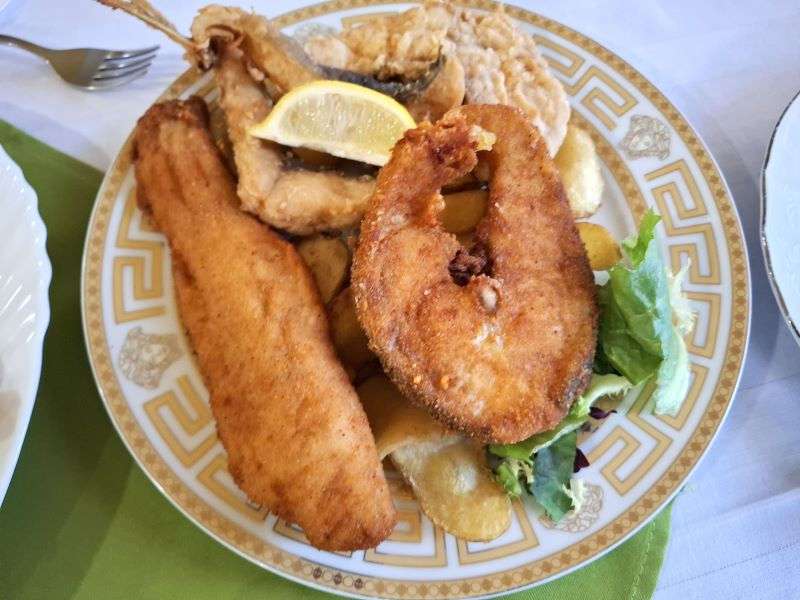
A special experience is the typical Styrian lunch - soup of several types of mushrooms with polenta, eggs in pumpkin oil and homemade desserts that are paired with light, fresh wines from our own production. Each wine is made in small batches and reflects the pure character of southern Styria, a very interesting and, for many Croatians, accessible region that you can enjoy during a day trip or choose as a destination where you will spend part of your vacation and make the most of your weekend getaway. Find all the details about this destination (and your own inspiration) at suedsteiermark.com
foto: Nikola Zoko


Comments