


Sweet by Nature: Exploring Egypt’s Date Traditions

In Egypt, dates are never just dates. They are history you can snack on, hospitality you can hold in your palm, and a reminder that some ingredients come with a biography longer than most civilizations. With its sun-soaked climate, fertile Nile Valley, and millennia of agricultural know-how, Egypt has become one of the world’s leading producers of dates. From Pharaonic times to modern iftar tables during Ramadan, dates have marked moments of nourishment, welcome, and ritual. They are everyday food, seasonal pleasure, and cultural shorthand all at once—proof that in Egypt, even the simplest fruit knows how to tell a story.

Take the Zaghlul date, impossible to miss with its glossy red skin and unapologetically crunchy bite. Grown mainly in the Nile Delta, especially around Beheira and Kafr El-Sheikh, Zaghlul breaks the usual “date expectations.” It is eaten fresh, not dried, and slightly early, offering a mild sweetness with a teasing astringent edge. Egyptians enjoy it plain, with nuts, or straight from the bunch, often as the first sign that date season has officially begun. For many, Zaghlul tastes like late summer and early autumn—less dessert, more ritual, and entirely nostalgic.

If Zaghlul is the extrovert, Hayani is the comfort classic. Dark red, almost black when ripe, soft and generously sweet, Hayani dates are among the most widely consumed in Egypt. Grown throughout the Nile Valley and Delta, they are loved for their moist flesh and naturally rich flavor. Nutritionally dense and easy to eat, Hayani dates often appear mashed into simple desserts, stirred into milk, or handed to children and elders alike as a quiet act of care. They are the kind of food that doesn’t need reinventing—because it never stopped working.
Then there are the dates of Siwa Oasis, grown where agriculture seems almost improbable. In this remote Western Desert oasis, palm trees flourish against all odds, producing semi-dry and dry dates with deep, caramel-like sweetness and impressive longevity. For generations, Siwan families have depended on dates not only as food but as currency, trade goods, and insurance against hard times. Local stories speak of dates as companions on long journeys and safeguards in harsh seasons—a fruit that knew how to wait patiently when little else could.
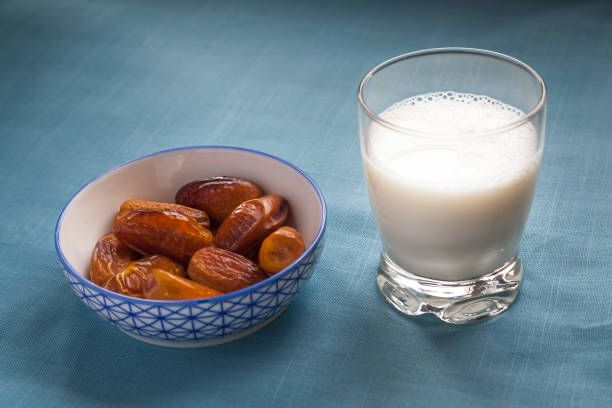
From a nutritional point of view, Egyptian dates are doing serious work behind their modest appearance. Packed with natural sugars for sustained energy, rich in fiber for digestion, and full of minerals like potassium, magnesium, and iron, dates earned their reputation long before nutrition labels existed. Farmers, laborers, travelers, and desert dwellers relied on them not out of trendiness, but necessity. What traditional wisdom long claimed—strength, recovery, vitality—modern science now happily confirms.

Date cultivation in Egypt is both ancient craft and living practice. Palms grow across the Nile Valley, Delta, and desert oases such as Siwa, Bahariya, and Kharga. Pollination, irrigation, and harvesting remain labor-intensive and communal, often guided by knowledge passed down through generations. Harvest season is less an agricultural task and more a social event, drawing families and neighbors together. Few foods can claim an unbroken relationship with the land stretching back to Pharaonic times—and still taste this good.
In the kitchen, Egyptian dates are wonderfully adaptable. They are eaten fresh or dried, stuffed with nuts, folded into cakes and biscuits, or blended into modern energy bars inspired by traditional flavors. In some regions, they even slip into savory dishes, adding sweetness where you least expect it. Whether it’s the crisp snap of Zaghlul, the velvety richness of Hayani, or the desert-hardened depth of Siwa dates, each variety carries the taste of its landscape. Together, they show how a single fruit can nourish bodies, anchor traditions, and quietly define a cuisine.
Photos by: Pixabay


Comments