


Mala Riba on Zagreb's Sea

The final “Wine by the Spoon” event of the year, now in its 28th edition, was held on Zagreb’s very own sea – Lake Jarun – at the restaurant Mala riba.

There, just as in the Adriatic Sea, the young manager Karla Mikičić navigates brilliantly. Fourteen years ago, her family, together with the Nikolac family, opened the tavern of the same name in Matulji near Opatija. The business in Matulji is running smoothly, so they decided to expand to Zagreb, where, since opening in June, they have become a recognisable destination for lovers of seafood. The Mikičić and Nikolac families are engaged in fishing and have an excellently organised fleet, ensuring that their restaurants receive the highest-quality fresh fish and the famously prized Kvarner scampi.

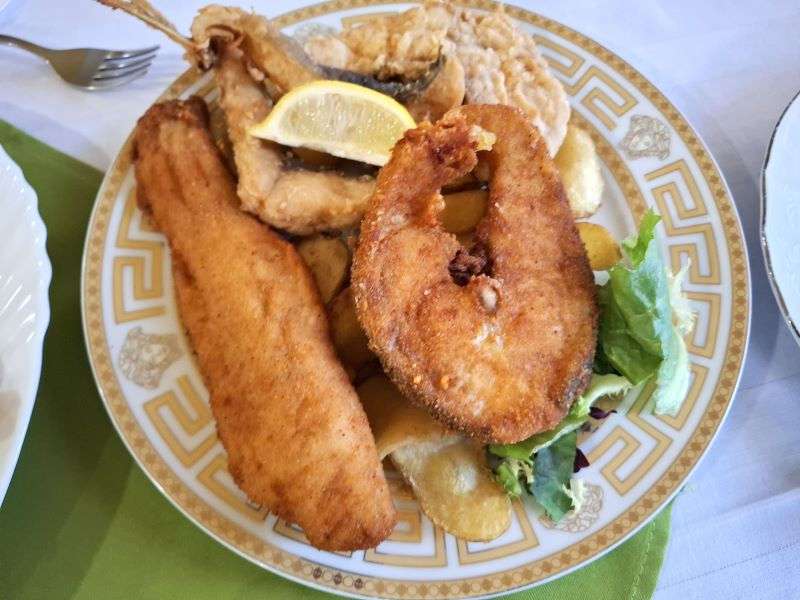
The restaurant concept is the same in Matulji and Zagreb, with the kitchen originally designed by top chef Zdravko Tomšić. Their menu is based on small fish, after which the restaurants are named. Their most popular dish is fritto misto, but the authors of the “Wine by the Spoon” project, Renata Cisar and Mustafa Topčagić, in agreement with Karla Mikičić, created an event menu focusing on dishes more closely associated with a spoon.

The evening began with brandies and liqueurs from the Krulčić Distillery in Lindar near Pazin. The owner, Renato Krulčić, is the fourth generation involved in producing spirits, marking 104 years since his great-grandfather Giovanni received the first licence. The base of their spirits is grappa (pomace brandy), and they represent, as Krulčić says, traditional Istria in a contemporary way. Guests sampled Travarica, made according to an old recipe and originally used as a calming tincture by Benedictine monks, as well as Crni trn, an Istrian wild plum picked after the first frost when its tartness turns to sweetness. Liqueur lovers particularly enjoyed their Amaro di oliva, made from olives, and Terranino.

The flavour of the exquisite fish dishes was further enhanced by Bajkin extra virgin olive oils. Loris Bajkin, the owner of the family farm, presented four single-variety oils (Buža, Istarska bjelica, Frantoio and Leccino) and the Familia blend, all sampled with crispy bites of homemade bread.

They planted their first olive trees in the mid-1990s in the village of Bajkini near Vižinada for family use, and today their farm boasts 3,800 trees across nine locations. Their exceptionally high-quality olive oils have won numerous prestigious awards at home and abroad, with their Buža variety recently taking gold in New York.

Dinner began with a trio of cold starters made from fish and seafood. Plates brimmed with delights: mullet marinated in lemon juice, pieces of amberjack, squid with broad beans and fennel… The dish was accompanied by the lively Rosé Premium Brut from Kutjevo Winery, produced using the traditional method from Pinot Noir grown on the exceptional Hrnjevac and Vinkomir vineyards. Its pleasant pink hue is enriched by aromas of red berries, dominated by strawberry, raspberry and cherry. This refined sparkling wine, presented by Petar Marincil of Kutjevo’s marketing team, is elegant and of a quality suited to both everyday enjoyment and special occasions. It is crafted using the traditional method and carefully aged in bottles – a worthy representative of Kutjevo’s wine tradition, which dates back to 1232.

Following the cold starter, guests warmed up with a homemade fish soup brimming with the richness of the sea – pieces of fresh white fish, Kvarner scampi and the ever-present rice. Local residents from the nearby Jarun and Vrbani neighbourhoods often stop by for this soup, as do walkers and athletes around the lake. The delicious soup was paired with Chardonnay 2024 from Franc Arman Winery in Vižinada. This world-renowned variety performs exceptionally well on the Narduči site. Its bright pale-yellow colour leads into aromas of fresh white fruit and flowers. Lively, fresh, slightly sweet and gently acidic, it paired beautifully with the soup’s full flavours.

The evening continued in a similarly comforting tone with Gvacet – fish from the daily catch cooked in a sauce of wine and olive oil. It was accompanied by another champion from Franc Arman Winery: Pinot Grigio 2024, also from Narduči. The wine has an unusual yellow colour with a reddish sheen, and on the nose it is fresh and fruity with a pleasant hint of dandelion. This harmonious wine, from a variety not widely grown in Istria, proved a revelation when paired with Gvacet, and was voted the best pairing of the 28th “Wine by the Spoon” edition by journalists. The Arman family has successfully continued the tradition begun in 1850 by Edoardo Arman with native Malvasia and Teran, now enriching it with international varieties.

Next came new spoons and with them Monkfish tripe with beans, a dish rarely seen in Zagreb’s fish restaurants and not very common even along the Adriatic. This speciality—belonging to the “love it or hate it” category—was paired with a unique wine, Črjena zemja 2023 from Kapîć Winery in Matulji, named after the nickname of one of the ancestors. Owner Toni Babić presented the wine, recounting the administrative challenges of ensuring this blend (50% Teran, 50% Refošk), made from grapes near Novigrad in Istria, is recognised within the Primorska Hrvatska wine region. The wine spent one year in barrique barrels, eight months in stainless steel, and the rest in bottle. Ideally it would have aged another six months, but Babić felt this event was the right moment to present it—and he was not mistaken. Its well-defined acidity, a hint of oak on the nose, and aromas of dark berries complemented the monkfish tripe superbly. The wine is named after a spot where the winemaker swam as a boy and jumped from the rocks.

It was then time for the sweet conclusion – chocolate profiteroles, served with an unusual and delicious olive-oil ice cream made specially for the occasion by Valle Losca Gelato from Volosko near Opatija. Representative Marino Bošnjak shared the story: it all began at the Valle Losca Tavern in Volosko, the place that inspired the development of the brand. Their vision is to uphold the tradition of true Italian gelato, emphasising natural ingredients (fresh milk and cream, and seasonal fruit from local producers) and authentic flavours. In addition to individual cups and gelato cakes, they offer family-sized packages in thermal boxes for home use. Valle Losca creates gelato artigianale that delivers genuine texture and flavour, free from artificial additives, offering customers an experience of pure indulgence.

Dessert, paired with Sweet Muscat 2024 from Iuris Winery, was enjoyed all the more knowing the winery is only twenty minutes from Mala riba, as co-owner Mario Jurašić mentioned. His partners in the winery are Tin Hudolin and head oenologist Domagoj Klasiček. Their semi-sweet Yellow Muscat has pronounced varietal aromas with intense scents of ripe melon and vineyard peach. Medium-bodied, exceptionally fruity, fresh and easy-drinking, it pairs beautifully not only with desserts but also with spicy Asian cuisine. Jurašić highlighted the advantages of their winery in Zagreb’s Hrašće, ideal for bottling and ageing wines from vineyards in the Danube and Slavonia regions, with excellent logistical benefits. The winery, opened last year, includes a wine cellar, wine bar and shop, completing the experience across their thirty-plus labels.

That coffee perfectly complements a gastronomic experience became clear at the end of the evening, when guests were served this liquid delicacy with 800 aromas. Hug & Punch—at once a hug and a punch, a coffee embrace and an aroma strike—offers a different approach to coffee enjoyment. This personalised coffee, explains educator Domagoj Trusić, is made from selected beans, much like the finest wines are made from the best grapes. Based in Matulji, Hug & Punch combines three roles: supplier of premium single-origin coffees, micro-roastery and educational centre. Besides enjoying top-quality coffee, visitors can learn everything about bean preparation, blending and crafting the perfect cup—and they leave with a new, unforgettable experience.
The eno-gastronomic project is soon entering its seventh year, during which participants have learned and delighted in wines, food and culinary pleasures. After a short break, the next gathering with journalists over glasses and plates is planned for mid-January 2026.
FAMA / Foto: Julio Frangen


Comments